Just after midnight on June 14, 2026, New York City lost its mind.
People spilled into the streets. There were tears, there was noise, there were people hugging strangers in the kind of way that only happens when something finally breaks loose after a very long time. The Knicks had just beaten the San Antonio Spurs to win the NBA championship for the first time since 1973. The celebration got so loud and so chaotic that it led to arrests.
But the question worth sitting with isn’t why they celebrated. That part’s easy.
The question is why they never left.
Between 1973 and 2026, the Knicks went through 24 different coaches and more than 400 players. Patrick Ewing never got a ring. Neither did Allan Houston, Bernard King, or Carmelo Anthony. The franchise lost a Game 7 to Houston in 1994. Lost in five to San Antonio in 1999. There were the Isiah Thomas years, the James Dolan era, seasons so bad they became a kind of local dark humor. And through all of it, the Knicks stayed within the top 10 of total league attendance — including years when they were genuinely, historically bad.
When they finally reached the Finals this year, the cheapest nosebleed seat in Section 225 at Madison Square Garden sold for over $11,500 on StubHub. A single courtside seat crossed $100,000. A pair sold for $279,804.
That is not the behavior of a fanbase that stayed because the product was good. That is something else entirely. And understanding what it is might be the most useful thing a brand strategist can do right now.
What Knicks Fans Were Actually Buying for 53 Years
Performance was not the product. The product was identity.
The Knicks sold out Madison Square Garden through eras of genuine dysfunction. They sold out through the Dolan ownership years. They sold out when Kevin Durant, Kyrie Irving, and James Harden were all playing across the river for the Nets. The vast majority of Knicks fans chose not to cross the bridge. When a Washington Post reporter talked to season-ticket holders before the Finals, one mentioned he had paid $15 for his seats back in 1999. He hadn’t sold them in 27 years.
That’s not fandom. That’s something closer to religion.
What the Knicks were selling — what fans were actually buying — is what it means to be a New Yorker who bleeds orange and blue. The basketball itself was almost incidental. The product was membership. The product was the right to say “we” when the Knicks finally won. The product was a shared identity that existed completely independent of whether the team was any good.
Brands spend enormous amounts of money trying to manufacture that. Most of them fail. The Knicks stumbled into it because they had no other choice — they couldn’t compete on performance, so their fans had to find another reason to stay. And they found one that turned out to be far more durable than wins ever could have been.
Why Losing Can Make Loyalty Stronger
Here’s the part that runs counter to everything most marketers assume.
Sports psychologist Dr. Daniel Wann has spent decades studying highly identified fans, and his research shows that deeply committed fans experience victory and defeat almost identically to the athletes themselves. Cortisol levels spike after losses. Testosterone rises after wins. They are, in every measurable physiological sense, in the game. They’re not watching from outside. They’re inside it.
The other finding, the one that actually explains the Knicks, is this: negative experiences don’t necessarily drive fans away. Empirical research shows that relegation, repeated losses, and seasons of failure can strengthen attachment rather than weaken it. Identity and shared history dominate over performance.
A 2019 study found that watching a game with other fans can help offset the psychological damage of losing — and that for fans of the losing team, sharing the pain may have protected them from losing self-esteem. In other words: when you suffer together, you belong to each other more. The team becomes the excuse to belong, not the reason.
One Knicks fan put it plainly in 2019, a year when the team finished with one of the worst records in franchise history: “It’s considered immoral to cut the suffering part out of the equation and just show up for the good times. That the satisfaction will be greater if you endure the suffering. Which is, of course, ridiculous and stupid — but I also kind of believe it.”
That is not irrational consumer behavior. That is identity talking. And identity doesn’t respond to rational arguments.
The Distinction Most Brands Miss
There are two different kinds of customer loyalty, and most brands only know how to build one of them.
The first is performance loyalty. The customer stays while the product delivers. If the burger is cold, they complain. If a better option appears, they leave. Performance loyalty is real and useful, but it’s fragile. The moment a competitor shows up with something better, cheaper, or newer, the calculation shifts.
The second is identity loyalty. This is what the Knicks had. The behavioral research frames it as the difference between the Outcome Fan and the Identity Fan. The Outcome Fan evaluates the product. The Identity Fan has merged with it. For the Identity Fan, switching isn’t a rational calculation — it’s a form of self-betrayal. It doesn’t feel like changing channels. It feels like changing sides. It carries a psychological cost that most people won’t pay, even if the new option is objectively better.
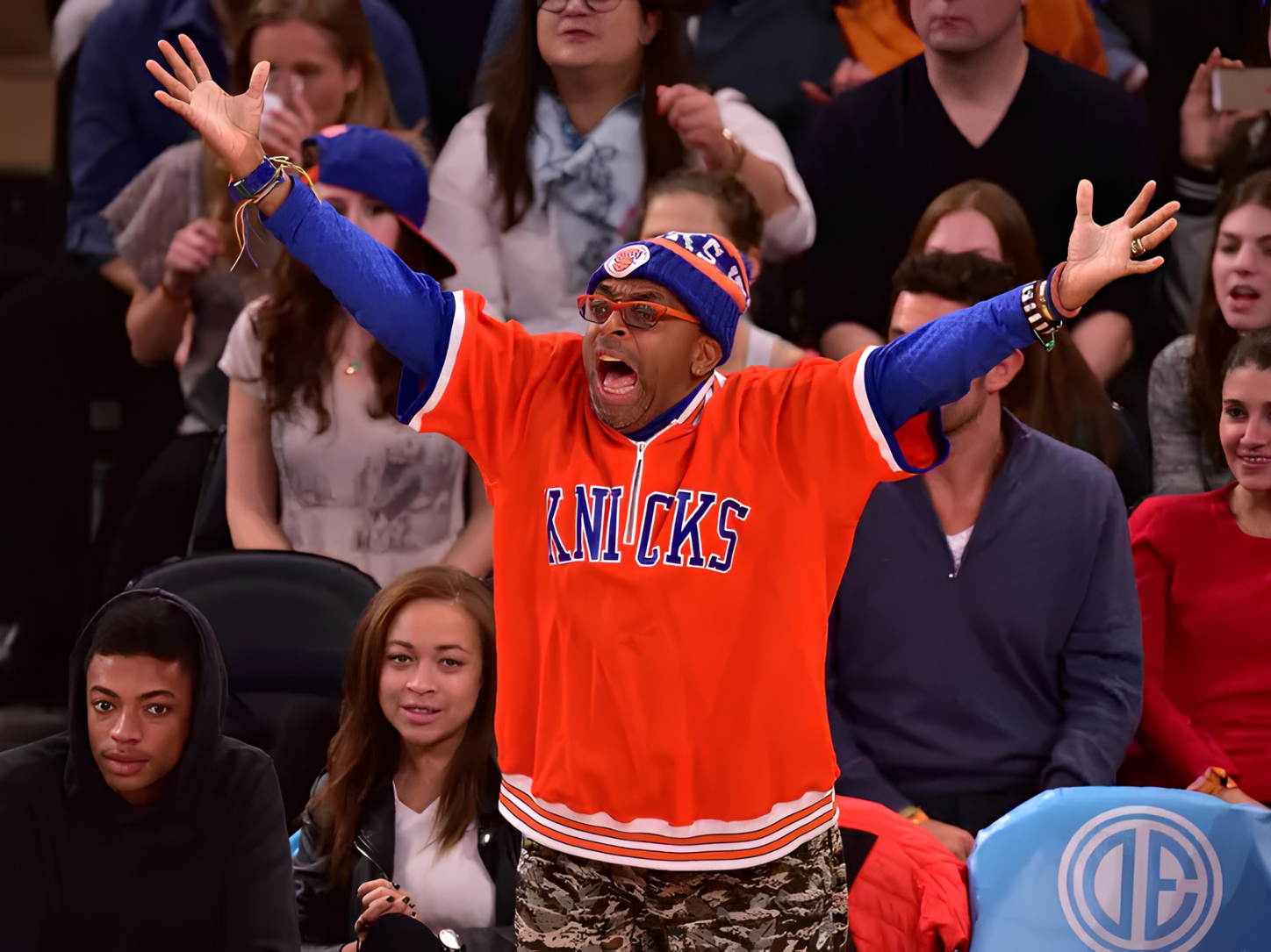
Spike Lee has held Knicks season tickets since 1985. He’s been courtside through all of it. Before Games this spring, fans burned incense and sage outside Madison Square Garden to cleanse the arena’s energy. Ben Stiller threw out items he was wearing after Game 3 losses, treating his own clothing as bad luck charms. These are not rational consumer behaviors. They’re tribal ones. And tribal behavior is what identity loyalty looks like when it’s operating at full strength.
If your customers define themselves partly through their relationship with your brand, you have a different kind of asset than you think you have. The rules change. You’re no longer competing on features. You’re competing on belonging.
What Every Brand with a Losing Streak Should Actually Learn
The lesson here is easy to get wrong, so it’s worth being specific.
The lesson is not “make your customers suffer and they’ll love you more.” Manufactured difficulty doesn’t build loyalty. Authenticity does.
What the Knicks actually did during those 53 years was stay consistently themselves. They didn’t abandon their identity during the hard times. They didn’t rename themselves or rebrand every time a new owner wanted a fresh start. They stayed at Madison Square Garden, the most famous arena in the world. They stayed in New York. They kept playing in orange and blue. The community around the team kept showing up, year after year, and the shared experience of losing together slowly welded that community together into something that no winning streak could have created on its own.
Knicks legend Larry Johnson said after the championship: “The Garden is back. It’s back like when we played and made our little run. The city is behind us.” The city was behind them the whole time. The championship just made it visible.
For brands: the customers who stayed through your worst stretch are your most valuable asset, and most companies spend zero time thinking about them. They focus all of their energy on acquisition, on new customers, on the next campaign. The loyal ones get taken for granted precisely because they’re reliable.
But they’re the ones who burned incense outside your building. They’re the ones who threw out their clothes after a bad quarter. They’re the ones who handed their loyalty down to their kids like a family heirloom.
The Parade
On June 18, four days after the championship, the Knicks held their first ticker-tape parade through the Canyon of Heroes. It started at Battery Park and moved north along Broadway to City Hall. The route was the same one that has hosted legends, astronauts, and world champions for over a century.
The people who lined those streets weren’t just celebrating a championship. They were celebrating their own loyalty. They stayed when they had every rational reason to leave. They stayed when the Nets had better players. They stayed through two decades of missing the playoffs, through owners who made bad decisions publicly and often, through heartbreak that became almost seasonal.
That loyalty is what brands spend fortunes trying to manufacture. The Knicks earned it the slow way — by being consistently, authentically themselves for 53 years, even when that meant disappointing everyone.
The title is the reward. But the loyalty was always the real story.
Leave a Reply