There are businesses spending thousands of dollars trying to figure out what they should post on social media, and then there is a guy in New Jersey putting on a camera and making hot dogs.
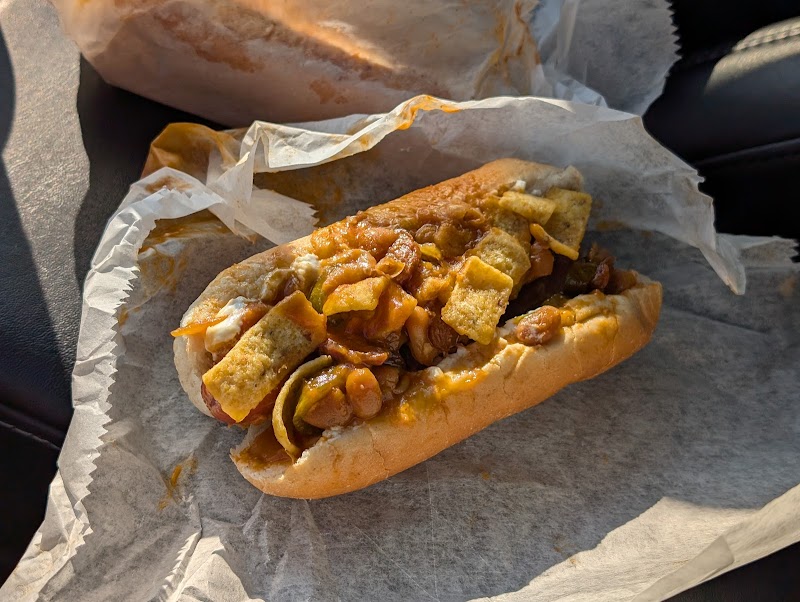
I’ve been to Chris’ Red Hots in Verona a number of times, and I’ll get my bias out of the way immediately because the food is genuinely delicious. My personal favorites are the Frito Pie and the chili cheese dog, and if you watch enough of their videos before going there, you start thinking about these things long before you’re actually standing at the counter.
That is what originally made the business interesting to me from a marketing perspective.
Chris’ Red Hots has been around for roughly 50 years, with the same family operating it for more than 30 of those years. The original operation is tied to its truck on Heller Parkway near Branch Brook Park in Newark, while the Verona storefront sits directly across from Verona Park. The menu is built around Sabrett hot dogs and house-made toppings such as hot onions, chili and hot cherry pepper mashed potatoes, along with stranger creations like the Frito Pie.
None of that sounds like the recipe for a massive content business.
Yet Chris’ Red Hots has built a YouTube channel with more than 200,000 subscribers, with videos centered heavily around the simple process of making food. Their shorts include everything from assembling a Frito Pie to working the truck, with the familiar POV format putting the viewer almost directly behind the counter.
The more I thought about it, the more I realized that this is exactly why the content works.
The product is already the content
Food businesses have one enormous advantage on social media that many of them completely waste: people actually like watching food being made.
You don’t need someone standing in front of a camera explaining that your restaurant uses quality ingredients. You can show the onions hitting the hot dog, the chili getting spooned on, the cheese going over the top and the Fritos getting crushed into the final product.
At Chris’ Red Hots, the camera puts you in the position of the person making the food. You watch an order come in and then see that order take shape right in front of you. A Frito Pie goes from an empty bun to this ridiculous combination of cream cheese, cheese, cowboy chili, barbecue beans and Fritos, which is exactly the kind of thing that makes you stop scrolling because you want to see where the whole thing ends up.
There isn’t much explanation necessary.
That is the marketing.
A lot of small businesses seem to think social media requires them to become entertainers completely separate from whatever their actual business does. They start chasing trends, lip-syncing to audio or creating graphics that could have come from almost any company.
Chris’ Red Hots does something much simpler. The work itself becomes entertaining.

I think more businesses should start there.
Before asking what trend you should participate in, ask whether there is something about what you already do every day that people would actually enjoy watching.
POV videos make a stranger feel like a regular
There is another reason I think these videos are so addicting, and it has less to do with hot dogs than it seems.
After watching somebody make enough orders from the same perspective, the place starts becoming familiar.
You recognize the counter. You recognize the containers. You know where the chili is going to come from. You start recognizing the combinations people order and probably develop your own opinion about which one looks best.
You haven’t actually worked there, but the POV makes you feel strangely close to the process.
That matters because familiarity has always been powerful in marketing. The difference is that social media can now create familiarity before somebody has ever visited your business.
Someone could live an hour away from Verona and watch Chris’ Red Hots for months before finally deciding to make the trip. When that person arrives, there is a good chance the place won’t feel completely new because they’ve already seen the counter hundreds of times on their phone.
The content has done part of the introduction already.
This is where I think a lot of businesses misunderstand what having a large social following can actually do. A follower doesn’t necessarily need to buy something today for the content to be working. They may watch for months, send a video to somebody else or remember the business when they’re eventually nearby.
The sale can happen much later than the first view.
A hot dog looks better when you watch someone build it
The other thing Chris’ Red Hots understands, whether intentionally or simply through years of making these videos, is anticipation.
If you showed me a picture of a Frito Pie hot dog, I would probably think it looked good.
Watching someone make it is different.
You see each ingredient added individually, which keeps creating these tiny moments of anticipation. Chili goes on. Then cheese. Then beans. Then Fritos. Your brain is basically assembling the taste before you’ve ever taken a bite.
The finished product feels more satisfying because you watched it become something.
This is one of the reasons process content works so well across the internet. People watch houses being pressure-washed, carpets being cleaned, watches being repaired, lawns being cut and sandwiches being made because there is something satisfying about seeing a process reach its conclusion.

For Chris’ Red Hots, that conclusion happens to be lunch.
The food also gives them an advantage because the menu is visually interesting. Their official menu includes signature combinations featuring chili, cheese and potatoes, along with creations such as the Frito Pie, Too Hot for Mami and rotating specialty dogs.
You might come across one video because you like hot dogs, but then another combination shows up that you’ve never seen before and suddenly you’re watching again.
That variety creates an almost endless supply of content without the business having to constantly invent new reasons to film.
The smartest part is that the videos don’t feel like ads
This is probably the biggest marketing lesson I take from Chris’ Red Hots.
Imagine the same business posting a graphic that says:
COME TRY THE BEST HOT DOGS IN NEW JERSEY!
Maybe someone likes it. Maybe somebody already planning to visit sees it.
Most people probably keep scrolling.
Now show them a hot dog being covered in cowboy chili, barbecue beans and Fritos from the perspective of the person making it.
You never had to tell them it looks good.
They decided that themselves.
That’s a much stronger position for a business to be in.
Marketing tends to become weaker when the audience can feel how badly you’re trying to market to them. We have all become incredibly good at recognizing advertisements, sponsored posts and corporate content, which means there is often an immediate instinct to keep scrolling as soon as something feels like it’s trying to sell us.
Chris’ Red Hots can promote the business every single time it uploads a hot dog video without needing to spend the entire video talking about the business.
The food does most of the convincing.
That is something restaurants, contractors, barbers, photographers, mechanics and almost any other visual business can learn from. You don’t always need to explain that you’re good at your job. Sometimes allowing people to watch you do the job is far more persuasive.
Social media can turn a local business into a destination
This is where things get especially interesting to me.
Chris’ Red Hots is a very local business. Its Verona location is a small grab-and-go storefront at 478 Bloomfield Avenue across from Verona Park, and the company still operates its Newark truck as well.
Yet its content reaches people who may have never heard of Verona, New Jersey.
The YouTube channel has accumulated more than 200,000 subscribers, while Chris’ Red Hots has also built sizeable audiences on other social platforms.
That completely changes what being a “local business” can mean.
Twenty years ago, a hot dog stand’s reputation might travel through word of mouth across a few neighboring towns. Someone would tell a coworker, who would bring their family, who would tell somebody else.
That still happens, but now one good video can introduce the same hot dog stand to somebody sitting on their couch several states away.
And the important thing is that people can eventually act on that curiosity.
Maybe they’re visiting New Jersey. Maybe they’re passing through. Maybe they live an hour away and decide they finally want to try the hot dogs they’ve been watching for six months.
At that point, social media has taken a simple neighborhood food business and turned it into somewhere people specifically want to experience.
That is a very different kind of marketing from buying an ad targeted to people within five miles.
Small businesses should stop assuming their everyday work is boring
I think there is a tendency among business owners to believe that what they do every day isn’t interesting because they’ve done it thousands of times.
Of course making a hot dog doesn’t seem interesting to the person who has made twenty thousand of them.
But the customer hasn’t.
The same thing applies to almost every business.
A mechanic has diagnosed the same problem a hundred times, but most customers have never seen what the problem actually looks like. A florist has arranged thousands of bouquets, but somebody watching at home may find the process incredibly satisfying. A photographer has edited thousands of pictures, while the customer rarely sees what goes into turning the original shot into the finished image.
Business owners are often sitting on content without realizing it because their own familiarity makes the work seem ordinary.
Chris’ Red Hots is a great reminder that ordinary work can become interesting when you give people the right point of view.
There isn’t some complicated set, massive production crew or elaborate marketing concept required to understand why the videos work. The camera lets you watch someone who is good at what they do make something people want to eat.
And then the food has to actually deliver.
That’s the part no social media strategy can fake forever.
I’ve eaten at Chris’ Red Hots, and the reason I’m writing this isn’t simply because the videos are good. The hot dogs are good too. My Frito Pie obsession started with the actual product, and the chili cheese dog is the kind of thing that makes returning pretty easy.
The content gets attention, but the food gives that attention somewhere to go.
That combination is what businesses should pay attention to.
You can spend all day trying to figure out the algorithm, studying hashtags or wondering what you’re supposed to post next. Sometimes the better question is much simpler:
What happens inside my business every day that my customers have never had the chance to see?
For Chris’ Red Hots, the answer was making hot dogs.
It turns out a lot of people wanted to watch.
Leave a Reply