Category: Uncategorized

  • Apple Foldable iPhone: Release Date, Price, Design and Why Apple Waited So Long

    Apple Foldable iPhone: Release Date, Price, Design and Why Apple Waited So Long

  • Mama Rao’s Kitchen in East Hanover NJ Makes Great Sandwiches and Understands Great Marketing

    Mama Rao’s Kitchen in East Hanover NJ Makes Great Sandwiches and Understands Great Marketing

    There are sandwiches that are good because of what’s inside them. Then there are sandwiches where you finish eating and realize the thing you keep thinking about is the bread.

    That’s Mama Rao’s Kitchen in East Hanover for me.

    I’ve gone there for lunch a number of times now, and it has become one of my favorite sandwich spots in New Jersey. My usual order is actually pretty simple: fried chicken cutlet, mayo, lettuce and tomato on their bread, with a Pepsi Zero on the side. Nothing crazy. Nothing designed to go viral. It’s just really good.

    I’ve also had their Caprese, and the chicken in general has always been excellent. Their menu goes much further than sandwiches, with fresh mozzarella, prepared foods, Italian specialties, cold cuts, catering and an Italian market. You can also build your own fried or grilled chicken sandwich, which is usually where I end up.

    But after following the business online and going there in person, I started noticing something else.

    Mama Rao’s is a really good example of what local marketing is supposed to look like.

    The Bread Is the Part I Remember

    I keep coming back to the bread because I think there’s a marketing lesson hiding in it.

    A lot of businesses spend enormous amounts of time trying to figure out their differentiator. They make lists. They rewrite their website. They create slogans about quality and service. Meanwhile, the thing customers actually remember is usually much simpler.

    At Mama Rao’s, for me, it’s the bread.

    The chicken can be great. The mozzarella can be fresh. The ingredients can all work together. But if you gave me the same sandwich on an average supermarket roll, I’m not sure I’d be writing an article about it.

    That matters.

    Good marketing becomes much easier when there is something about the product people genuinely want to talk about. The goal isn’t to manufacture a reason for somebody to care. It’s to notice what people already care about and make sure you keep doing that thing exceptionally well.

    There are reviews of Mama Rao’s going back years that specifically mention the fresh bread, fresh mozzarella, friendly staff and cleanliness of the store. That lines up almost exactly with what has stood out to me when I’ve gone there.

    That consistency is probably more valuable than any clever advertising campaign.

    Because eventually somebody has to eat the sandwich.

    Social Media Can Get Someone Hungry Before They Ever Walk In

    Mama Rao’s has also built a legitimately strong presence on Instagram.

    Their account, @mamaraoskitchen, has grown to roughly 6,900 followers as I’m writing this. For a local Italian deli in East Hanover, that’s meaningful. More importantly, the account feels active. They show food. They make videos about what they’re cooking. They use humor. You get some personality from the people behind the business instead of seeing an endless stream of polished promotional graphics.

    That distinction matters more than businesses sometimes realize.

    People generally don’t open Instagram hoping to see an advertisement for lunch.

    They open it because they’re bored, checking what friends are doing, looking for something funny or wasting a few minutes. Food businesses have an advantage because the product itself can become entertainment. A chicken cutlet being sliced, mozzarella being pulled apart, a sandwich getting built or somebody joking around behind the counter can fit naturally into the feed.

    The person watching might not be hungry when the video starts.

    Thirty seconds later, they might be.

    And restaurant discovery really has moved in this direction. A 2025 Eater and Vox Media survey of more than 2,000 U.S. adults found that 77% of Gen Z respondents and 67% of millennials said they typically discover new restaurants through social media. DoorDash research also found Instagram was the most popular social platform for restaurant discovery among respondents who use social media to find places to eat.

    That changes what a restaurant’s Instagram account actually is.

    It isn’t simply a place to announce specials.

    It’s part menu, part entertainment, part storefront and part recommendation engine.

    Follow Mama Rao’s Kitchen on Instagram

    The Best Food Content Doesn’t Really Feel Like Advertising

    This is where I think Mama Rao’s gets something right that many local businesses struggle with.

    Small businesses are constantly told they need to “create content,” which can lead to some painfully forced social media.

    You know the type.

    A business owner clearly doesn’t want to be on camera. Somebody has written a script. There’s trending audio playing for no apparent reason. The caption sounds like an advertisement. Everybody involved seems uncomfortable.

    Technically, the business created content.

    Nobody wants to watch it.

    What works much better is letting the business itself provide the material.

    If you run an Italian deli, you already have interesting things happening all day. Sandwiches are being made. Chicken is frying. Fresh mozzarella is sitting behind the counter. Prepared foods are coming out. Customers are ordering combinations other people might want to try. Employees are talking to each other. There are daily routines, personalities and small moments happening constantly.

    The content doesn’t have to invent a story.

    The business already has one.

    Mama Rao’s seems to understand that. Their Instagram gives you reasons to notice the food while still giving the account some personality. That personality matters because there are plenty of places in New Jersey where you can buy an Italian sandwich.

    The internet gives a local business the chance to become familiar before you’ve ever walked through the door.

    You’ve already seen the food. You’ve seen the people. Maybe you’ve laughed at one of their videos. Maybe you’ve watched a sandwich get made three different times.

    Then one afternoon you’re hungry and happen to be near East Hanover.

    Guess which place suddenly feels familiar?

    That’s marketing working quietly.

    Instagram Gets You There. The Experience Decides Whether You Come Back.

    There is one major problem with great restaurant marketing.

    It raises expectations.

    You can make the best food video imaginable. You can get thousands of views. You can make a chicken cutlet look unbelievable on Instagram.

    Then somebody actually shows up.

    This is the part that I think gets ignored when people talk about social media marketing. Marketing can create curiosity, but eventually the real business has to take over.

    Every time I’ve gone to Mama Rao’s, the place has been very clean. The people working there have been extremely kind. The food has been consistently good. It feels like a business that cares about what happens after somebody walks through the door.

    And apparently I’m far from the only person who has had a good experience. As of August 2026, DoorDash lists Mama Rao’s at 4.9 stars with more than 500 ratings, while Restaurantji shows a 4.8 rating across 110 reviews.

    Those numbers will change over time, but the larger point won’t.

    Social media might convince someone to try a restaurant once.

    The sandwich has to convince them to come back.

    The person behind the counter has to make them feel welcome.

    The store has to feel cared for.

    The second visit is where branding becomes real.

    Local Businesses Don’t Need Millions of Followers

    I think we’ve developed a strange way of measuring success online.

    Six thousand followers can sound small when we spend all day watching creators with 500,000 followers, brands with several million and videos that randomly hit 20 million views.

    But scale works differently for a local business.

    Mama Rao’s doesn’t need everyone in America to know who they are.

    They need people in East Hanover, Livingston, Florham Park, Roseland, Parsippany, Hanover and the surrounding area to see their food enough times that the name sticks.

    That’s a very different marketing problem.

    A local business can have a relatively small audience by internet standards and still have enormous awareness within the few miles that actually matter.

    This is why follower count by itself can be misleading.

    If you have 7,000 followers scattered randomly across the world, that might not do much for a sandwich shop in New Jersey. If a meaningful percentage of those people live nearby, send posts to friends, recognize the name and eventually walk into the store, that audience becomes incredibly valuable.

    The internet made businesses obsessed with reach.

    Local businesses should probably be more obsessed with recognition.

    You want somebody driving through East Hanover to hear “Mama Rao’s” and immediately picture a sandwich.

    That’s a stronger position than simply accumulating views.

    Make Something People Want to Tell Their Friends About

    What I like most about Mama Rao’s Kitchen is that the marketing lesson isn’t particularly complicated.

    Make something good.

    Give people something specific to remember.

    Show the product.

    Let the business have a personality.

    Treat people well when they show up.

    Then do it again tomorrow.

    Their official menu has plenty of elaborate sandwiches with names like Fig This, Fig That, Hot Sicilian, Italian Stallion and Amore Mio. They have fresh mozzarella, prepared foods, catering and an Italian market too.

    And yet my favorite thing might still be ordering a fried chicken cutlet with mayo, lettuce and tomato.

    That’s probably the highest compliment I can give them.

    They don’t need to convince me to order the craziest thing on the menu. The basic sandwich is good enough that I want to go back.

    For all the conversations we have about algorithms, content strategy, branding, reach and engagement, sometimes marketing comes down to something much more ordinary.

    Someone eats a really good sandwich.

    They remember the bread.

    They tell somebody else where they got it.

    And eventually, they write an entire blog post about it.

    Visit the Mama Rao’s Kitchen website

    View the Mama Rao’s Kitchen menu

  • Chris’ Red Hots Put a GoPro Behind the Counter. The Marketing Took Care of It.

    Chris’ Red Hots Put a GoPro Behind the Counter. The Marketing Took Care of It.

    There are businesses spending thousands of dollars trying to figure out what they should post on social media, and then there is a guy in New Jersey putting on a camera and making hot dogs.

    I’ve been to Chris’ Red Hots in Verona a number of times, and I’ll get my bias out of the way immediately because the food is genuinely delicious. My personal favorites are the Frito Pie and the chili cheese dog, and if you watch enough of their videos before going there, you start thinking about these things long before you’re actually standing at the counter.

    That is what originally made the business interesting to me from a marketing perspective.

    Chris’ Red Hots has been around for roughly 50 years, with the same family operating it for more than 30 of those years. The original operation is tied to its truck on Heller Parkway near Branch Brook Park in Newark, while the Verona storefront sits directly across from Verona Park. The menu is built around Sabrett hot dogs and house-made toppings such as hot onions, chili and hot cherry pepper mashed potatoes, along with stranger creations like the Frito Pie.

    None of that sounds like the recipe for a massive content business.

    Yet Chris’ Red Hots has built a YouTube channel with more than 200,000 subscribers, with videos centered heavily around the simple process of making food. Their shorts include everything from assembling a Frito Pie to working the truck, with the familiar POV format putting the viewer almost directly behind the counter.

    The more I thought about it, the more I realized that this is exactly why the content works.

    The product is already the content

    Food businesses have one enormous advantage on social media that many of them completely waste: people actually like watching food being made.

    You don’t need someone standing in front of a camera explaining that your restaurant uses quality ingredients. You can show the onions hitting the hot dog, the chili getting spooned on, the cheese going over the top and the Fritos getting crushed into the final product.

    At Chris’ Red Hots, the camera puts you in the position of the person making the food. You watch an order come in and then see that order take shape right in front of you. A Frito Pie goes from an empty bun to this ridiculous combination of cream cheese, cheese, cowboy chili, barbecue beans and Fritos, which is exactly the kind of thing that makes you stop scrolling because you want to see where the whole thing ends up.

    There isn’t much explanation necessary.

    That is the marketing.

    A lot of small businesses seem to think social media requires them to become entertainers completely separate from whatever their actual business does. They start chasing trends, lip-syncing to audio or creating graphics that could have come from almost any company.

    Chris’ Red Hots does something much simpler. The work itself becomes entertaining.

    I think more businesses should start there.

    Before asking what trend you should participate in, ask whether there is something about what you already do every day that people would actually enjoy watching.

    POV videos make a stranger feel like a regular

    There is another reason I think these videos are so addicting, and it has less to do with hot dogs than it seems.

    After watching somebody make enough orders from the same perspective, the place starts becoming familiar.

    You recognize the counter. You recognize the containers. You know where the chili is going to come from. You start recognizing the combinations people order and probably develop your own opinion about which one looks best.

    You haven’t actually worked there, but the POV makes you feel strangely close to the process.

    That matters because familiarity has always been powerful in marketing. The difference is that social media can now create familiarity before somebody has ever visited your business.

    Someone could live an hour away from Verona and watch Chris’ Red Hots for months before finally deciding to make the trip. When that person arrives, there is a good chance the place won’t feel completely new because they’ve already seen the counter hundreds of times on their phone.

    The content has done part of the introduction already.

    This is where I think a lot of businesses misunderstand what having a large social following can actually do. A follower doesn’t necessarily need to buy something today for the content to be working. They may watch for months, send a video to somebody else or remember the business when they’re eventually nearby.

    The sale can happen much later than the first view.

    A hot dog looks better when you watch someone build it

    The other thing Chris’ Red Hots understands, whether intentionally or simply through years of making these videos, is anticipation.

    If you showed me a picture of a Frito Pie hot dog, I would probably think it looked good.

    Watching someone make it is different.

    You see each ingredient added individually, which keeps creating these tiny moments of anticipation. Chili goes on. Then cheese. Then beans. Then Fritos. Your brain is basically assembling the taste before you’ve ever taken a bite.

    The finished product feels more satisfying because you watched it become something.

    This is one of the reasons process content works so well across the internet. People watch houses being pressure-washed, carpets being cleaned, watches being repaired, lawns being cut and sandwiches being made because there is something satisfying about seeing a process reach its conclusion.

    For Chris’ Red Hots, that conclusion happens to be lunch.

    The food also gives them an advantage because the menu is visually interesting. Their official menu includes signature combinations featuring chili, cheese and potatoes, along with creations such as the Frito Pie, Too Hot for Mami and rotating specialty dogs.

    You might come across one video because you like hot dogs, but then another combination shows up that you’ve never seen before and suddenly you’re watching again.

    That variety creates an almost endless supply of content without the business having to constantly invent new reasons to film.

    The smartest part is that the videos don’t feel like ads

    This is probably the biggest marketing lesson I take from Chris’ Red Hots.

    Imagine the same business posting a graphic that says:

    COME TRY THE BEST HOT DOGS IN NEW JERSEY!

    Maybe someone likes it. Maybe somebody already planning to visit sees it.

    Most people probably keep scrolling.

    Now show them a hot dog being covered in cowboy chili, barbecue beans and Fritos from the perspective of the person making it.

    You never had to tell them it looks good.

    They decided that themselves.

    That’s a much stronger position for a business to be in.

    Marketing tends to become weaker when the audience can feel how badly you’re trying to market to them. We have all become incredibly good at recognizing advertisements, sponsored posts and corporate content, which means there is often an immediate instinct to keep scrolling as soon as something feels like it’s trying to sell us.

    Chris’ Red Hots can promote the business every single time it uploads a hot dog video without needing to spend the entire video talking about the business.

    The food does most of the convincing.

    That is something restaurants, contractors, barbers, photographers, mechanics and almost any other visual business can learn from. You don’t always need to explain that you’re good at your job. Sometimes allowing people to watch you do the job is far more persuasive.

    Social media can turn a local business into a destination

    This is where things get especially interesting to me.

    Chris’ Red Hots is a very local business. Its Verona location is a small grab-and-go storefront at 478 Bloomfield Avenue across from Verona Park, and the company still operates its Newark truck as well.

    Yet its content reaches people who may have never heard of Verona, New Jersey.

    The YouTube channel has accumulated more than 200,000 subscribers, while Chris’ Red Hots has also built sizeable audiences on other social platforms.

    That completely changes what being a “local business” can mean.

    Twenty years ago, a hot dog stand’s reputation might travel through word of mouth across a few neighboring towns. Someone would tell a coworker, who would bring their family, who would tell somebody else.

    That still happens, but now one good video can introduce the same hot dog stand to somebody sitting on their couch several states away.

    And the important thing is that people can eventually act on that curiosity.

    Maybe they’re visiting New Jersey. Maybe they’re passing through. Maybe they live an hour away and decide they finally want to try the hot dogs they’ve been watching for six months.

    At that point, social media has taken a simple neighborhood food business and turned it into somewhere people specifically want to experience.

    That is a very different kind of marketing from buying an ad targeted to people within five miles.

    Small businesses should stop assuming their everyday work is boring

    I think there is a tendency among business owners to believe that what they do every day isn’t interesting because they’ve done it thousands of times.

    Of course making a hot dog doesn’t seem interesting to the person who has made twenty thousand of them.

    But the customer hasn’t.

    The same thing applies to almost every business.

    A mechanic has diagnosed the same problem a hundred times, but most customers have never seen what the problem actually looks like. A florist has arranged thousands of bouquets, but somebody watching at home may find the process incredibly satisfying. A photographer has edited thousands of pictures, while the customer rarely sees what goes into turning the original shot into the finished image.

    Business owners are often sitting on content without realizing it because their own familiarity makes the work seem ordinary.

    Chris’ Red Hots is a great reminder that ordinary work can become interesting when you give people the right point of view.

    There isn’t some complicated set, massive production crew or elaborate marketing concept required to understand why the videos work. The camera lets you watch someone who is good at what they do make something people want to eat.

    And then the food has to actually deliver.

    That’s the part no social media strategy can fake forever.

    I’ve eaten at Chris’ Red Hots, and the reason I’m writing this isn’t simply because the videos are good. The hot dogs are good too. My Frito Pie obsession started with the actual product, and the chili cheese dog is the kind of thing that makes returning pretty easy.

    The content gets attention, but the food gives that attention somewhere to go.

    That combination is what businesses should pay attention to.

    You can spend all day trying to figure out the algorithm, studying hashtags or wondering what you’re supposed to post next. Sometimes the better question is much simpler:

    What happens inside my business every day that my customers have never had the chance to see?

    For Chris’ Red Hots, the answer was making hot dogs.

    It turns out a lot of people wanted to watch.

  • The Honest Car Salesman: What TextOmar Gets Right About Trust

    The Honest Car Salesman: What TextOmar Gets Right About Trust

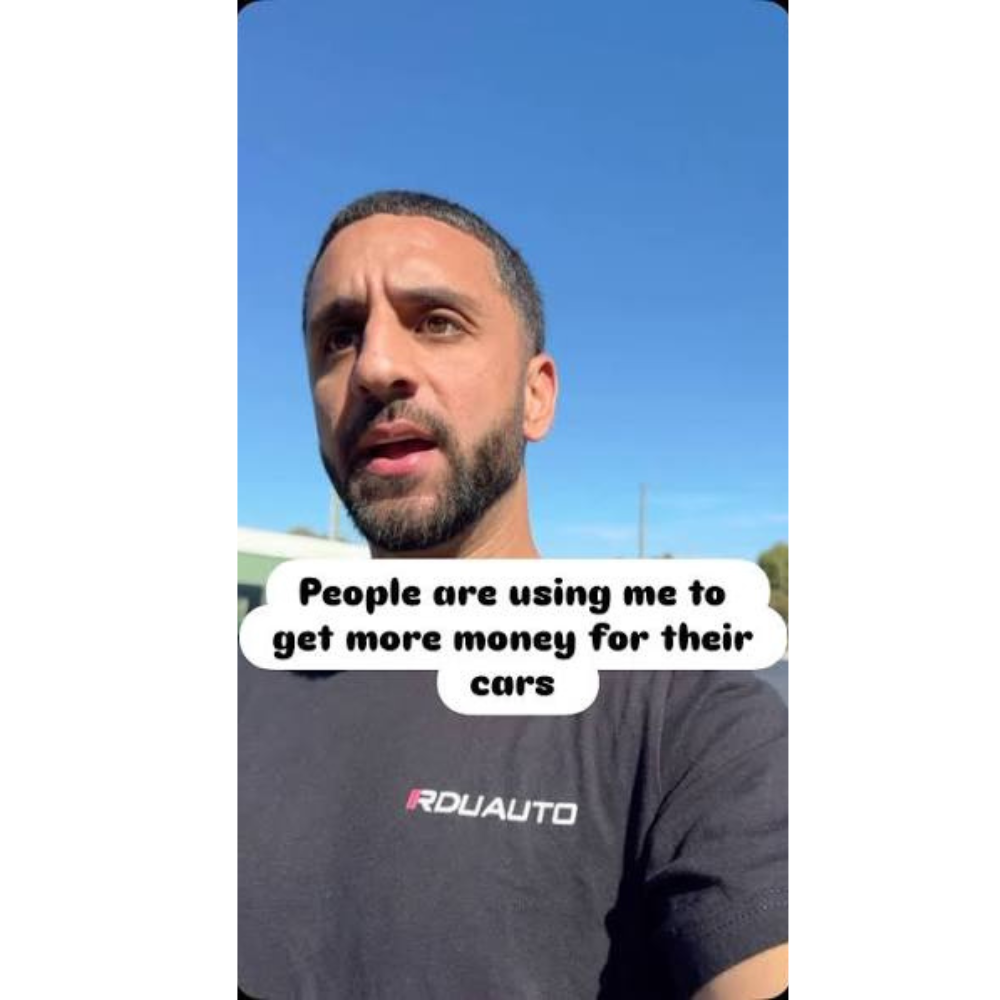
    I was sitting on my couch one day scrolling through Instagram while I was looking for a car, and I came across something I really wasn’t expecting to find: an honest car salesman.

    Honesty and car salesmen haven’t exactly gone hand in hand over the years, which is probably part of the reason Omar Dahbour’s content caught my attention so quickly. Omar, better known as TextOmar on Instagram, owns RDU Auto in Raleigh, North Carolina, and much of his content revolves around teaching people how to buy cars, what to avoid, how dealerships make money, and what customers should actually be paying attention to before they sign anything.

    That seems like a strange strategy when you first think about it. He makes money selling cars, yet a large part of his social media presence is built around making customers smarter, more skeptical, and harder to take advantage of.

    I think that’s exactly why it works.

    He teaches people the things they normally expect a dealership to hide

    Anyone who has gone through the process of buying a car knows how much suspicion comes with it.

    You look up the value of the car before walking into the dealership. You check what your trade-in is worth. You read reviews, compare prices, calculate payments, and try to figure out what fees might suddenly appear once you’re sitting at the salesperson’s desk. Even if the dealership is completely legitimate, many customers walk in expecting that somebody is going to try to get one over on them.

    I was doing the same thing while I was looking for a car, which is probably why Omar’s videos stood out to me.

    Instead of simply showing vehicles on his lot and telling everyone what a great deal they are, he spends a lot of his time explaining the business from the customer’s side. One of my favorite things he does is his series about cars he would avoid. He’ll talk about certain models, explain why he doesn’t like them, and give people reasons to think twice before spending their money.

    There is something almost ironic about a car salesman telling people what cars they shouldn’t buy, but from a marketing perspective, it makes perfect sense. Every time he gives somebody information that could save them from making a bad purchase, he becomes a little more believable when he eventually tells them a car is worth buying.

    That’s something many businesses get backward. They spend so much time trying to convince customers that everything they sell is great that eventually none of it feels believable.

    Transparency works because customers already know you need to make money

    One of the things I find most interesting about Omar’s content is how open he can be about the actual business of selling cars. He has shown people what he paid for vehicles, discussed issues with cars, and walked viewers through things dealerships usually aren’t eager to talk about.

    I don’t think customers expect a business to make zero profit. We all understand that the dealership needs to make money, the salesperson needs to make money, and there has to be some margin built into the transaction.

    The problem starts when the customer feels like the only reason you’re making money is because they didn’t know something you knew.

    There is a major psychological difference between thinking, “They made money selling me this car,” and thinking, “They made money because they tricked me.”

    The first is business. The second creates resentment.

    Omar seems to understand that people are much more comfortable with a business making money when they understand where the money is coming from. Once you remove some of the mystery from the transaction, the relationship between the customer and salesperson starts to feel less adversarial.

    That matters a lot in an industry where distrust is practically built into the buying experience.

    How you handle a problem may matter more than the sale itself

    Another reason I keep watching Omar’s content is the way he deals with complaints and situations that would probably make a lot of business owners lose their patience.

    One video that stuck with me involved a customer who had purchased a Tesla and needed a charger. Omar called the customer and told him that simply for following the dealership, they were going to give him one.

    My reaction was pretty simple: who does that?

    The charger itself isn’t really the interesting part. What matters is the mentality behind the decision.

    A lot of businesses view every customer problem as an expense they need to minimize. They start calculating how little they can do while technically resolving the issue. Omar’s approach often seems to come from a different place. He appears to understand that the way a customer feels after a problem is resolved can become far more valuable than whatever it costs to fix that problem in the moment.

    People talk about bad experiences, but they also talk about businesses that surprised them in a good way.

    That creates stories.

    And stories travel much farther than advertisements.

    His content works because it doesn’t always feel like he’s trying to sell you a car

    This might be the biggest lesson dealerships and other businesses can take from his social media presence.

    Most companies are terrible at social media because they treat every post like an advertisement.

    They post the product, tell you how great the product is, ask you to buy the product, and then come back tomorrow and do basically the same thing again. There is rarely a reason to follow the account unless you’re actively shopping for whatever they’re selling at that exact moment.

    Omar gives people a reason to watch even when they aren’t buying a car.

    You might see a video explaining which vehicles to avoid, another showing what he paid for something, another breaking down a problem with a car, or one explaining how a deal actually works. The content has value before the transaction ever happens.

    That becomes incredibly powerful over time.

    Imagine following someone for six months while they repeatedly teach you how to avoid getting ripped off when buying a car. Then one day your current car dies and you need another one.

    Who are you going to remember?

    Probably the guy who’s spent the last six months trying to help you avoid making a bad decision.

    That is where content stops being content and starts becoming reputation.

    Social media has changed how far trust can travel

    There was a time when a dealership mainly competed with other dealerships within driving distance. You might visit three or four places around your town, compare what they had, and eventually make a decision based on price, inventory, and whichever salesperson you trusted the most.

    Social media has changed that equation.

    Someone in another state can watch dozens of Omar’s videos before they ever speak with him. They can see how he talks about customers, how he reacts when something goes wrong, how he explains pricing, and whether his advice seems consistent over time.

    By the time that person finally reaches out, Omar isn’t really a stranger anymore.

    This is something I think a lot of local businesses still underestimate. Your physical location determines where your building sits, but the internet determines how far your reputation can go.

    If someone trusts a dealership enough, driving several hours or even buying from another state suddenly doesn’t seem as ridiculous. The process becomes less about finding the closest car and more about finding the person you actually trust to sell you one.

    That is a huge shift.

    Honesty may become even more valuable in the AI era

    I also think there is a bigger reason Omar’s style of content feels so refreshing right now.

    We are entering a period where polished content is becoming incredibly cheap and easy to produce. AI can write a company’s captions, make advertisements, create images, answer customer questions, and make a small business look much larger than it actually is.

    That doesn’t automatically make any of those things bad, but I think it changes what people look for.

    A polished advertisement doesn’t prove much anymore.

    People want some sense of who they’re dealing with. They want to see how a business owner reacts when something doesn’t go perfectly. They want opinions that feel like actual opinions. They want somebody to tell them when something isn’t worth buying instead of pretending every product is amazing.

    That kind of trust is much harder to manufacture.

    You can generate a hundred social media posts in an afternoon. You can’t generate years of people believing that you’re going to tell them the truth when money is involved.

    As more of the internet starts to feel automated, I think visible honesty becomes more valuable.

    What car dealerships should learn from TextOmar

    If I owned a dealership, I would spend some time watching Omar’s content, but I wouldn’t necessarily try to copy his exact videos. The bigger lesson is the mentality behind them.

    Tell people what you wouldn’t buy. Explain why one car is priced differently from another. Show customers how trade-ins work. Talk about the mistakes buyers make. Explain what happens at auctions. Show the problems you find during inspections. Tell someone when the cheaper option might actually make more sense.

    Most importantly, give people information that is useful even when it doesn’t immediately lead to a sale.

    Some dealerships probably hate that idea because they are focused on maximizing every individual transaction. I think that way of thinking is becoming less effective.

    Customers have too much access to information now, and they can tell each other about their experiences instantly. People don’t expect you to run a charity. They understand that you need to make money. What they increasingly don’t tolerate is feeling like you made that money by hiding something from them.

    Maybe the car business could operate that way years ago because customers had fewer options and less information. That’s much harder now.

    People can compare prices before they walk through the door. They can research the vehicle while they’re sitting in your showroom. They can read reviews, watch videos, check forums, and find someone online who will explain exactly how the deal works.

    The smartest salesperson may not be the person who knows how to squeeze the most money out of a customer once.

    It may be the person customers trust enough to come back to for the next twenty years.

    That’s what I find so interesting about Omar.

    He is selling cars, but the thing that seems to separate him from everyone else isn’t really the cars. It’s the feeling that you’re dealing with somebody who would rather explain the truth to you than hope you don’t figure it out.

    In an industry that has spent decades fighting a reputation for dishonesty, that becomes a serious business advantage.

    Omar, if you ever happen to read this, thank you for bringing some honesty into a process that a lot of people genuinely hate going through.

    We need more businesses willing to understand that you can make money without making the customer feel like they lost.

  • 3 Simple Social Media Tips for Small Business Owners

    3 Simple Social Media Tips for Small Business Owners

    I have worked with many small businesses, and I often hear the same thing over and over:

    “I just don’t have time to do this whole social media thing.”

    I understand. A lot goes into running a business, and the last thing on your mind may be creating a social media post, filming a video, or designing a flyer.

    However, I believe it is important to make social media part of your routine. Spending less than 20 minutes posting a picture of a product, showing the work you are doing, or recording a short video can help more people discover and understand your business.

    Many customers look at a company’s social media accounts before contacting them. It is one way they decide whether the business appears active, professional, and trustworthy.

    Don’t believe me? Think of it this way: Imagine two Instagram accounts. One has not posted in more than two years, while the other posts regularly. Which business immediately feels more trustworthy?

    I often ask business owners this question: If you were a potential customer visiting your Instagram page for the first time, what would you think about your business?

    If your page creates doubts or does not show customers what you want them to see, it may be time to start posting more consistently.

    Here are a few simple tips that you can apply to your business. These tips will not magically make your business successful overnight. Social media growth requires consistency, patience, and a willingness to keep trying.

    Tip 1: Be Real in Your Content. Be Yourself.

    One thing I dislike about content on Instagram, Facebook, YouTube, and other platforms is when every post feels overly edited or too polished.

    Sometimes, content can look so promotional that it no longer feels authentic. A simple video created by the owner or an employee can often be more engaging than something that looks like it came from the same marketing template used by every other business.

    There is nothing wrong with hiring someone to help with your content. However, people often connect more with authenticity than with content that feels overly produced or fabricated.

    My biggest recommendation is to be yourself and talk about what you know.

    Show your products. Record yourself making a pizza or building a cabinet. Create a time-lapse of your process. Use smart glasses to film a point-of-view video of your work. Make a funny video that reflects your personality.

    People enjoy watching content that feels real. When your content feels genuine, it helps people feel more connected to you and your business.

    Tip 2: Don’t Obsess Over Views

    This is a mistake that many business owners make.

    Not every video is going to receive thousands of views. More often than not, a post will not perform exactly the way you expected, and that is okay.

    The goal should be consistency and engagement.

    When someone comments on your post or video, respond to them. That person could become a customer, a regular viewer, or someone who recommends your business to others. People want to feel heard and acknowledged.

    I also know that most business owners and employees check their phones throughout the day, so I do not completely believe the excuse that there is no time to post. Social media does not need to take hours. Even a few intentional minutes can make a difference.

    The main thing is to create a realistic schedule and stick to it. You could post three days a week, every day, or even twice a week. What matters is that you remain consistent.

    Think about your favorite television series. If a new episode normally comes out every Friday, but then nothing appears the following week without an explanation, you would probably wonder what happened. Consistency helps people know what to expect from you.

    Tip 3: You Don’t Need to Hire a Company or Buy Fancy Equipment

    I once spoke with a business owner who thought they needed a DSLR camera, professional lighting, microphones, scripts, and other expensive equipment to create content.

    That is an understandable thought, but it is not necessary.

    I have seen many successful business accounts create all of their content using only a phone. Modern phones are more than capable of recording videos, taking quality pictures, and editing content.

    If it makes sense for your business, investing in a company phone can be helpful. However, you do not need the most expensive equipment to get started.

    I have seen simple, low-production videos outperform professionally produced content many times. The idea, personality, and message often matter more than the equipment.

    I also recommend watching what other creators and businesses are doing. Pay attention to the ideas that are working and think about how you can adapt them to fit your own business. Everyone gets inspiration from others. The goal is to make the idea your own.

    Final Thoughts

    At the end of the day, I understand that business owners value their time and want to see a return on anything they invest in.

    A common question is whether social media is really worth the time.

    My answer is yes.

    Look at how many businesses have experienced significant growth simply because they consistently shared their products, services, stories, and personalities online.

    It is easy to become comfortable with the way things have always been done. However, you have to be willing to try something different. Otherwise, you may never discover what could work for your business.

    I hope these tips encourage you to start posting, experiment with new ideas, and give people a better look at the work you do.

  • Christopher Nolan’s The Odyssey Proves the Internet No Longer Waits to See the Movie

    Christopher Nolan’s The Odyssey Proves the Internet No Longer Waits to See the Movie

    I went into Christopher Nolan’s The Odyssey on Saturday and already knowing the internet had spent months trying to convince itself the movie was a problem.

    The casting was wrong. The armor was wrong. The accents were wrong. Certain actors were apparently too modern, too famous, or simply different from what strangers online pictured when they thought about ancient Greece.

    Then I watched the movie.

    I loved it.

    The casting works. The scale is enormous without feeling empty. More important, Nolan understands something many of the early arguments missed: The Odyssey has survived for thousands of years because people keep retelling it.

    A perfectly preserved museum version would probably be less faithful to the story’s history than a filmmaker taking risks with it.

    We Now Review Movies Before We See Them

    Before The Odyssey opened, the movie had already been turned into hundreds of smaller internet arguments.

    People debated Lupita Nyong’o’s casting. They debated Elliot Page. They debated Travis Scott. They debated American accents, modern dialogue, costumes, armor, and whether Nolan understood the ancient world.

    Most of these conversations happened before anyone had seen the finished performances.

    That’s the strange part.

    The discussion wasn’t really about the movie. The movie didn’t exist for the public yet. People were reacting to casting announcements, set photos, trailer clips, rumors, and screenshots.

    Nolan eventually described the pre-release backlash as irrelevant because the loudest critics didn’t know what the film actually was. He compared the experience to the years he spent dealing with people’s expectations around Batman.

    He was right.

    The internet no longer waits for a finished work. It reacts to fragments because fragments arrive first, travel faster, and require less thought.

    A complete movie asks for three hours of your attention. A casting announcement asks for three seconds of outrage.

    Guess which one performs better online?

    “Historical Accuracy” Is a Strange Demand for a Myth

    Some criticism focused on whether Nolan’s version was historically accurate.

    That sounds reasonable until you remember what The Odyssey actually is.

    Odysseus fights monsters. Gods interfere with human lives. Men are turned into animals. Sirens lure sailors toward death. Nobody has proven that Odysseus was a real person, and the poem grew out of an oral storytelling tradition long before it became the fixed text many readers know today.

    There isn’t a security camera recording of ancient Ithaca that Nolan failed to consult.

    People can still debate whether a costume fits the likely period or whether a ship resembles something from the Bronze Age. Those discussions can be interesting. But complete historical accuracy was never available here.

    Even the accent debate exposes how much of what we call accuracy is really familiarity.

    Ancient Greeks did not speak English with polished British accents. Hollywood trained audiences to associate that sound with emperors, kings, Romans, Greeks, and anyone wearing a robe near a stone column.

    When a movie breaks that pattern, it can feel wrong. But “this doesn’t match the other movies I’ve seen” is different from “this is historically inaccurate.”

    We often mistake cinematic tradition for historical truth.

    The Casting Controversy Was Never Really About Acting

    A person can dislike a casting choice after watching the performance. That’s fair.

    What happened with The Odyssey was different. Several actors became symbols in arguments that had very little to do with what they actually did on screen.

    People weren’t reviewing performances. They were reviewing the idea of the performer.

    That has become common with major franchises and adaptations. Fans develop a private version of a character, sometimes over many years. When the official version looks different, it feels as though something has been taken from them.

    The reaction becomes personal.

    But Matt Damon works as Odysseus because Nolan isn’t trying to make him vanish into a historical reenactment. Damon brings years of audience recognition with him. We already associate his face with survival, intelligence, endurance, and men trying to find their way home.

    That recognition becomes part of the storytelling.

    The same principle applies throughout the cast. Nolan uses familiar faces as anchors inside an unfamiliar, mythological world. You may see the actor at first. As the movie moves forward, you begin seeing the character.

    Casting famous people can become distracting when a movie has nothing else to hold your attention. The Odyssey is too large, physical, and confident to get swallowed by its cast.

    Nolan Made an Ancient Story Feel Like an Event Again

    Universal promoted The Odyssey as the first movie shot entirely with IMAX film cameras. Nolan also built much of the movie’s appeal around scale, real locations, physical environments, and the feeling that human beings were actually being placed against something larger than themselves.

    You can feel that commitment while watching it.

    The ocean doesn’t seem like a background. It feels threatening. The ships feel vulnerable. The world feels large enough to get lost inside.

    That matters because modern blockbusters often feel strangely small, even when they cost hundreds of millions of dollars. The screen may be filled with destruction, but very little feels dangerous or permanent.

    Nolan understands that spectacle works when the audience believes someone had to go somewhere, build something, carry something, climb something, or survive something.

    He also understands that people still want movies to feel like events.

    There was something fitting about seeing The Odyssey in a crowded theater. This story began as something performed and passed between people. Thousands of years later, audiences are still gathering in dark rooms to hear another person tell it.

    The technology changed. The human behavior didn’t.

    The Internet Wants to Be Right Before the Story Begins

    What stayed with me after The Odyssey wasn’t the argument over whether every helmet belonged to the correct century.

    It was how badly we want to form an opinion before an experience has the chance to change us.

    We don’t simply watch culture anymore. We position ourselves around it.

    We announce whether a movie will fail. We decide whether an actor is wrong. We predict what the director is trying to say. We choose a side while the work is still being made.

    Being early feels like being smart.

    But early opinions are usually built from the least complete information. A trailer can’t show you rhythm. A photograph can’t show you a performance. A casting announcement can’t tell you whether the actor will work inside the finished story.

    The Odyssey became a target because it was large enough for everyone to project something onto it.

    Then the lights went down, the actual movie began, and all those fragments had to compete with the finished thing.

    That is still the power of a movie theater.

    For three hours, the conversation has to stop.

    The story finally gets to speak for itself.

  • Why Are OpTic Gaming Fans So Loyal? The Green Wall Explained

    Why Are OpTic Gaming Fans So Loyal? The Green Wall Explained

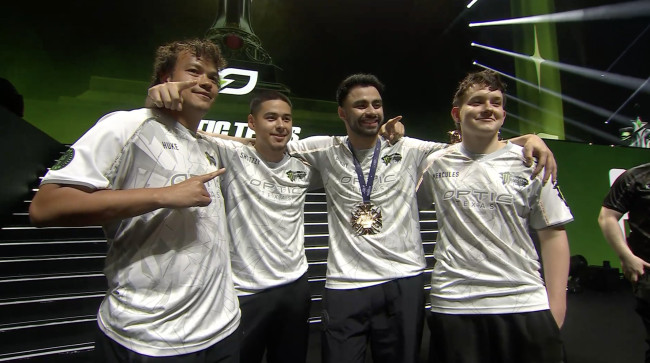
    On June 28, 2026, OpTic Texas lifted the CDL Major 4 trophy in Nanterre, France, after coming back from a 3-0 upper bracket loss to beat LA Thieves 4-3 in the grand final. The arena was green. The crowd was loud. And most of the people there had been fans for years before this specific win. Insider Gaming

    That’s the thing worth stopping on.

    OpTic Texas had topped the CDL standings all season without winning a single trophy before Paris. Most sports fanbases get restless in that situation. Viewership drops, the discourse gets dark, the fair-weather people find somewhere else to be. The Green Wall didn’t flinch. They showed up to a tournament in a different country, rooting for a team that hadn’t closed anything all year. Insider Gaming

    Esports fan loyalty is a phrase that gets thrown around a lot. But OpTic Gaming is the case study that actually earns it. These fans don’t just follow a team. They belong to something. And the difference between those two things is the whole story.

    Did OpTic Build Its Fanbase by Winning — or by Being Watched?

    OpTic Gaming was born in 2006 somewhere in the chaos of Call of Duty lobbies on Xbox Live, starting as a group that figured out an entertaining way to play the game and began recording their gameplay and sharing it online. Trick-shot montages on YouTube, before “content creator” was a job title. Before esports had a structure. Before anyone was writing checks. OpTic Gaming

    In order to maximize time for content and competition, the OpTic team moved into a house in Chicago. The 6050 house created some of the most iconic moments in esports, taking the competitive aspect, content, and fanbase of OpTic to the next level. Nadeshot, Scump, H3CZ, BigTymer, and others were watched by hundreds of thousands of fans in their content and on stage. OpTic Gaming

    This is the part that gets lost when people try to reverse-engineer OpTic’s success. The OpTic House wasn’t a marketing campaign. It was just what they did. Fans watched players eat breakfast, argue about maps, grind games until two in the morning. Live-streaming was new. The access felt real because it was real.

    H3CZ described a moment early in that era when all four players launched their streams simultaneously and Call of Duty hit the top of the Twitch page. He screenshotted it. Said this had never happened before. Said there was something there.

    He was right. But what he’d actually built wasn’t a streaming channel or a competitive team. He’d built trust. And trust, it turns out, is stickier than a trophy.

    What Actually Is the Green Wall — and Why Does the Name Matter?

    Most sports teams have fans. The Green Wall is something different, and the distinction matters more than it might seem.

    The Green Wall’s motto is “Together we stand, together we fall, together we are the Green Wall.” There’s a color. There’s a name. There’s a shared history that goes back over a decade. Fans don’t just follow OpTic. They are part of a named group with its own language, its own internal culture, and its own friendships. Dexerto

    OpTic fan Malakai Nactor, who has been part of the Green Wall since 2012, put it plainly: “I have met and made some of my best friends by being a part of the Green Wall. Every member of the Green Wall is part of one big family, community.” Medium

    That quote gets at something social psychologists have studied for decades. Social identity theory holds that people derive real self-esteem from the groups they belong to. When your group has a name, a color, a ritual, and a history, leaving it isn’t just switching which team you root for. It means stepping out of relationships you’ve built inside that group. It means giving up part of how you describe yourself.

    OpTic was able to link the fanbase, the Green Wall, and the competitive teams in a way no other organization had done before. The team is almost beside the point once that happens. The community becomes the product. OpTic Gaming

    What Happens When You Take the Trust Out of a Brand?

    This is the section that earns the argument.

    In 2017, OpTic was acquired by Infinite Esports, a holding company created after Neil Liebman and co-investors bought a majority interest in the organization. That company was then acquired in 2019 by Immortals Gaming Club, which resulted in H3CZ stepping down from his role and the OpTic brand passing fully into corporate hands. Medium

    The buyers kept the logo. They kept the green. They kept the name. What they stripped out was the people.

    All OpTic fans abandoned the OpTic brand and became Huntsmen fans. Scump, the biggest face of Call of Duty esports and one of the biggest contributors to OpTic’s success, left OpTic and followed H3CZ to the Huntsmen. Medium

    The numbers tell the rest. Despite OpTic’s YouTube channel having 1.4 million subscribers and the Huntsmen’s having only 123K, the Huntsmen averaged 17 times more viewers for their last 12 videos than OpTic — 105K vs. 6.2K. Despite OpTic’s Twitter having 3.1 million followers compared to the Huntsmen’s 187K, the Huntsmen’s tweets were still getting 10 times more interactions. Medium

    Corporate OpTic had all the brand equity on paper. It was nearly worthless without the trust behind it.

    H3CZ described the Immortals-owned version in three words: “That ain’t us.” The fans had already reached the same conclusion before he said it publicly. That’s the clearest possible proof that OpTic’s fanbase was never attached to an asset. They were attached to people.

    Why Did Green Wall Fans Stay Loyal Through a Trophyless Season?

    Come back to 2026. OpTic Texas had been flagging a bit heading into Major 4, but their efficacy in the CDL was still not in doubt. They’d led the standings all year. They just hadn’t won anything. Insider Gaming

    That was a notion laid to rest in Paris, with the team stepping up and showing resilience to take down LA Thieves, a team on a sixteen-match win streak going into the grand final. The comeback itself was dramatic. Down to their last hope after getting swept in the upper bracket, OpTic beat Paris Gentle Mates to stay alive, then reversed the result against the Thieves in the final. Insider Gaming

    But the behavioral point isn’t the win. The point is that the fans were there before it.

    Research on fan behavior backs this up. Highly committed fans are measurably more resilient to poor performance and less likely to switch allegiances than casual ones. The Green Wall’s commitment runs deep enough that a trophyless regular season doesn’t register as abandonment-worthy. They’re too invested in the identity to leave over results. The trust was rational, not blind — OpTic was elite, just finishing second — but even if they weren’t, many of these fans wouldn’t have gone anywhere. The community was still there.

    What Did OpTic Do That Most Brands Still Haven’t Figured Out?

    Three specific things. Not a framework. Not five pillars. Just three things, grounded in what actually happened.

    First: they built human access before they built a brand. Live-streaming was introduced to the internet during the OpTic House era, giving fans a direct connection to the OpTic members as they practiced or played games together. Fans knew Scump, Nadeshot, and H3CZ as people before they knew them as competitors. The parasocial trust came first. Competitive respect came later. That order of operations is everything. OpTic Gaming

    Second: they gave the fanbase a name and a mythology. Not just colors, but a motto, a history, a shared language. There’s a difference between an audience and an identity group. Audiences disperse when attention moves. Identity groups are load-bearing. The Green Wall has survived corporate acquisition, roster changes, years of near-misses, and a decade of industry chaos, because it’s more than a fan club. It’s a named community with its own social fabric.

    Third: H3CZ stayed visible and accountable throughout. He posted directly to fans, showed up on podcasts, talked openly about the corporate acquisition and what it cost OpTic. Trust isn’t built through polish or press releases. It’s built through consistency of character over years, especially when things go wrong.

    Brands that try to shortcut this by buying an influencer partnership or putting a creator’s name on a product are buying reach. That’s not the same thing as what the Green Wall actually is. Reach disperses the moment the contract ends.

    Can Any Brand Build What OpTic Built — or Was It a One-Time Accident?

    Probably not an exact copy. OpTic’s version of this was built in a specific cultural window, when streaming was genuinely new, when parasocial access felt rare and special, when a house of gamers streaming daily was something you couldn’t find anywhere else. That window isn’t open the same way anymore.

    But the underlying mechanism isn’t gone.

    The Chicago Huntsmen’s strong performance in the inaugural 2020 CDL season, including breaking a viewership record with 143,000 concurrent viewers during their home series, helped demonstrate the potential for city-based teams to drive engagement and growth. That wasn’t random. It was the Green Wall energy ported to a new team, because H3CZ and the players came with it. Grokipedia

    Research from WSC Sports’ 2025-2026 Generational Fan Study found that 62% of fans now discover teams through short-form video, and that Gen Z loyalty forms around personalities rather than organizations. The opportunity to build the next version of what OpTic built is still there. But it requires the same input: actual proximity between the people behind a brand and the people who follow it. Not performed proximity. Not a quarterly YouTube video where the CEO waves at the camera. Real access, over time, before there’s anything to win.

    The window for building the next Green Wall isn’t closed. It just requires starting before you’re winning.


    The Green Wall in Paris on June 28 was full before the grand final started. Those fans didn’t show up because OpTic had already won. They showed up because they’d been there for years, through corporate erasure and a trophyless season and every near-miss in between.

    The inversion is worth sitting with. The Green Wall didn’t grow because OpTic kept winning. OpTic kept winning — and kept surviving everything that tried to kill it — because the Green Wall was already there.

    That’s not a fanbase. That’s a brand that belongs to its people. Most companies spend years trying to manufacture that relationship. OpTic built it by being one of the first groups of gamers to record their gameplay and share it online, before anyone had a name for what they were creating. OpTic Gaming

    It started on a livestream, in a house in Chicago, long before anyone knew what they were doing. That’s probably why it lasted.


    Frequently Asked Questions

    Why are OpTic Gaming fans called the Green Wall?
    The Green Wall is the official name for OpTic Gaming’s fanbase, built around the organization’s signature green color. It comes with its own motto — “Together we stand, together we fall, together we are the Green Wall” — and a shared community identity that has developed over more than a decade of content, competition, and connection between players and fans.

    Did OpTic Gaming build its fanbase through winning or content?
    Content came first. OpTic started as a Call of Duty sniping clan uploading montages to YouTube in 2006, and built its deepest fan connections through the OpTic House era in Chicago, where players livestreamed their daily lives and practice sessions. Fans trusted the people before they cared about the trophies.

    What happened to OpTic fans when the brand was sold to Immortals?
    They left with H3CZ and Scump. When Immortals Gaming Club acquired OpTic in 2019 and H3CZ departed, fans followed him and his players to the Chicago Huntsmen. Despite the Huntsmen having a fraction of OpTic’s social media following, the Huntsmen generated roughly 17 times more viewership per video than the corporate-owned OpTic brand.

    Why do esports fans stay loyal even when their team is losing?
    Highly committed fans form identity-level attachments to their communities, not just performance-level attachments to results. Research on fan behavior consistently shows that deeply embedded fans are more resilient to poor performance. For Green Wall fans, leaving OpTic wouldn’t just mean switching teams. It would mean leaving a community where many have built real friendships.

    What is the psychology behind sports fan loyalty?
    Social identity theory is the core framework. People derive self-esteem from the groups they belong to. When a community has a name, rituals, a shared history, and internal relationships, membership becomes part of how people see themselves. Leaving the group means losing part of that identity, which makes casual defection psychologically expensive.

    How did H3CZ build the Green Wall community?
    By building human access before building a brand. Fans watched H3CZ, Scump, Nadeshot, and others live through the OpTic House streams — the daily grind, the arguments, the late nights. The parasocial trust formed first. Competitive credibility followed. H3CZ also stayed publicly accountable and visible throughout the organization’s turbulent ownership history, which maintained trust even when the brand itself was under strain.

    What can brands learn from OpTic Gaming’s community strategy?
    Three things: build human access before you build a brand, give your community a name and a mythology rather than just an audience to broadcast to, and maintain consistency of character over time rather than relying on polish. Buying reach through influencer deals isn’t the same as building the kind of identity group the Green Wall became.

    Who won CDL Major 4 in 2026?
    OpTic Texas won CDL Major 4 on June 28, 2026, in Nanterre, France, defeating the Los Angeles Thieves 4-3 in a grand final comeback. OpTic received $150,000 and 100 CDL points, putting the team in strong position heading into CDL Champs in July.


  • Toy Story 5 Made a Tablet the Villain Because Being Replaced Was Always the Real Fear

    Toy Story 5 Made a Tablet the Villain Because Being Replaced Was Always the Real Fear

    Toy Story is the best animated franchise in movie history.

    I stand by that.

    I’ll also be honest. I haven’t seen Toy Story 5 yet. I have seen every other Toy Story movie, and part of me still believes the story should have ended with Toy Story 3. That ending felt complete. Andy giving the toys away felt like the right final note. It hurt, but it hurt in the way growing up actually hurts.

    You leave things behind.

    You do not always mean to.

    You just do.

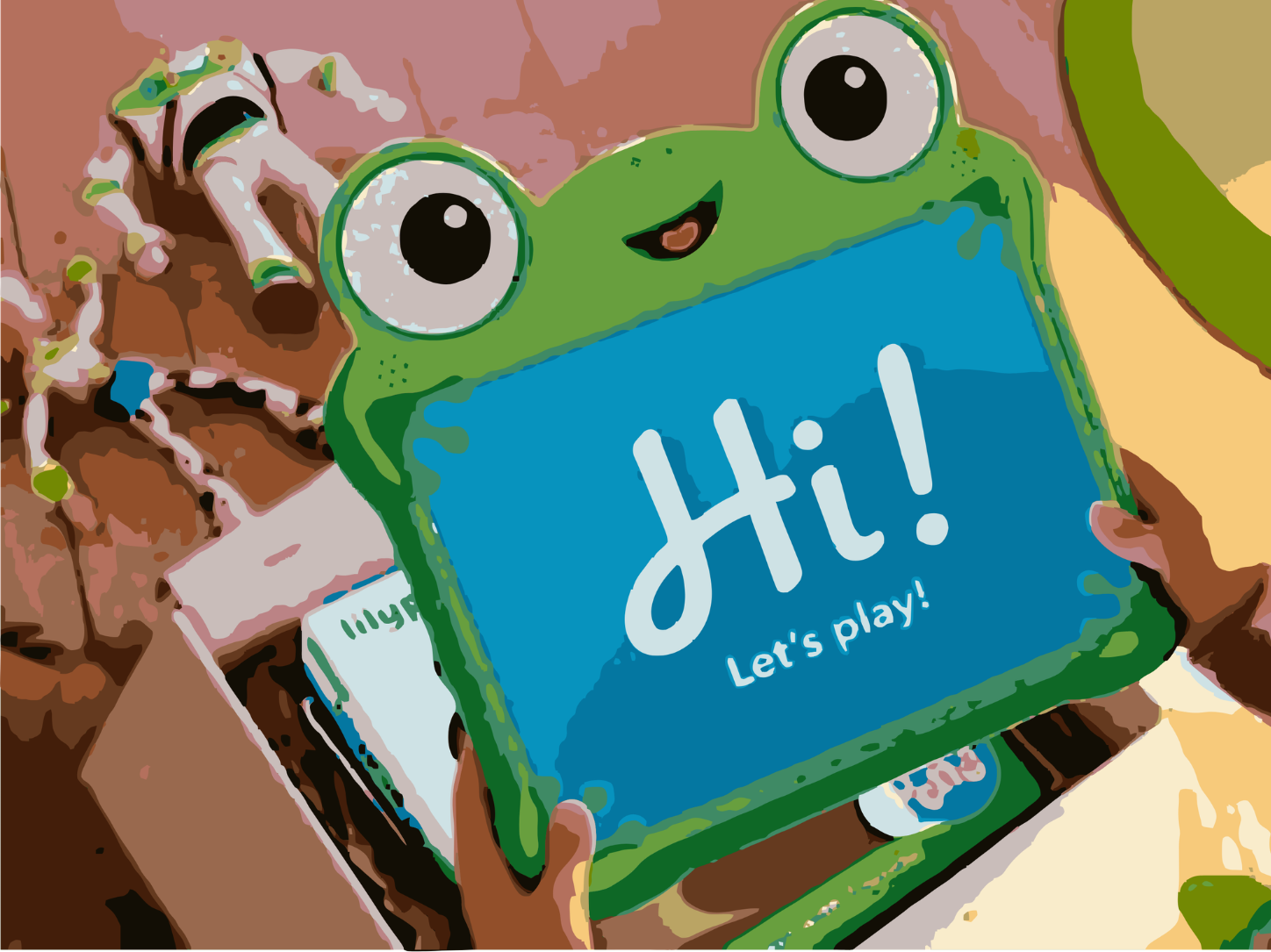
    But the more I think about Toy Story 5 making a tablet the villain, the more I understand why Pixar went there.

    Because Toy Story was never only a growing up story.

    The deeper theme was always being replaced.

    Woody was scared of Buzz because Buzz became the new favorite. Jessie had already been forgotten by the girl who once loved her. The toys have always lived with the same fear: what happens when the person who once chose you stops choosing you?

    That is why these movies work.

    They are about toys, but the fear is human.

    Everyone knows what it feels like to be replaced, or at least to worry that it could happen. Replaced by a new friend. A new coworker. A new relationship. A new version of someone’s life that no longer has the same space for you.

    Pixar just made that fear small enough to fit inside a toy box.

    And now, with Toy Story 5, that fear has a new shape.

    A tablet.

    The tablet makes sense because the toys were always losing attention

    The tablet as the villain feels obvious at first.

    Of course Pixar would go there. Kids use tablets. Parents complain about screen time. Everyone knows the iPad kid stereotype. It is an easy modern topic.

    But I think it goes deeper than that.

    The tablet works because it is the newest version of the same old Toy Story problem.

    The toys are always fighting for attention.

    In the first movie, Woody loses attention to Buzz. Buzz is newer, cooler, flashier, and more exciting. Woody is still loved, but he no longer feels safe in his place. That is what makes him act out. That is what makes the story work.

    The fear is not really that Buzz exists.

    The fear is that Andy might choose Buzz instead.

    That same fear keeps showing up in different forms. A child grows up. A toy gets left behind. A favorite becomes something from the past. A room changes. A kid changes. A toy waits around for a person who no longer reaches for it.

    That is brutal when you really think about it.

    Toy Story made children laugh at talking toys while adults quietly felt the sadness underneath it.

    That is why making a tablet the threat actually fits the franchise. The tablet is not random. It is not Pixar trying to sound modern for no reason.

    It is the next thing that can replace the toys.

    And maybe the hardest thing they have ever had to compete with.

    I grew up during the shift from toys to screens

    I grew up in the late 90s and early 2000s, so I feel like I caught both sides of childhood.

    I remember toys still feeling big.

    Action figures. Pokémon cards. Beyblades. Game Boy. Trading things at school. Going to someone’s house and seeing what toys they had. Making up games outside. Playing with stuff that did not do anything until you made it do something.

    Then slowly, everything started moving toward screens.

    The Game Boy got bigger. Consoles became the center of the room. The iPod Touch showed up. Then the iPhone. Then tablets became normal. Then kids were not only playing games. They were watching other people play games. Then Roblox became the hangout. YouTube became the babysitter. TikTok became the background noise.

    I am not saying all of that is bad.

    I played video games. I liked technology. Most people do.

    But there was a real shift.

    Toys used to ask something from us. You had to bring the story. You had to make the sound effects. You had to decide what the character was doing. You had to be bored for a minute before the game in your head started.

    Screens changed that.

    A screen gives you the color, the sound, the reward, the movement, the next thing, and the next thing after that.

    That is why the tablet is such a strong villain for Toy Story.

    A toy waits for a child to imagine.

    A tablet starts entertaining right away.

    That is not a fair fight.

    Working in childcare made this feel even more obvious

    I worked in childcare for over seven years, and I watched the shift happen in real life.

    When I first started, kids talked about toys, shows, cards, Beyblades, and whatever game they made up at recess. Then over time, the conversations changed.

    More Roblox.

    More YouTube.

    More iPads.

    More kids talking about games they played online instead of games they played in the room.

    And I heard parents say the same kind of things over and over.

    “He cannot get off the iPad.”

    “She has a meltdown when we take it away.”

    “It is the only thing that keeps him calm.”

    “She would stay on it all day if we let her.”

    After a while, it became clear that the tablet itself was not the whole problem. A lot of the problem was how adults let it enter the room.

    That may sound harsh, but it is true.

    Kids are kids. If you give a child unlimited access to the most entertaining object in the house, of course they are going to want it. Of course they are going to choose it. Of course a regular toy starts looking boring next to it.

    That does not mean the child is bad.

    It means the tablet is really good at what it does.

    It also means adults have to be honest about what is happening.

    A tablet can be useful. It can help a child learn. It can give a parent a break. It can keep a kid calm during a long car ride or a stressful moment.

    But when the tablet becomes the default, everything else has to fight harder.

    Toys have to fight harder.

    Books have to fight harder.

    Outside has to fight harder.

    Boredom has to fight harder.

    Even other people have to fight harder.

    That is what makes the Toy Story 5 idea feel real.

    The villain is not a tablet because tablets are evil.

    The tablet is the villain because it represents how easy it is for childhood to be replaced by something faster.

    The real fear is being replaced by something cooler

    Everyone focuses on screen time, but I think the bigger idea is replacement.

    That is what Toy Story has always understood better than almost any animated movie.

    Being replaced is one of the most painful feelings because it makes you question what you meant in the first place.

    If someone can move on from you, were you ever that important?

    That question is sitting underneath Woody’s whole character.

    He wants to believe he matters because Andy loves him. But then Buzz shows up, and suddenly Woody sees how fragile that position is. He is still Woody. He did not change overnight. But Andy’s attention changed.

    That is what hurts.

    And that is why the tablet works so well as the next villain.

    The tablet is new. It is cool. It does a thousand things. It gives instant rewards. It is what other kids are using. It is what the culture keeps pushing forward.

    How does a toy compete with that?

    How does anything older compete with that?

    That is where this becomes more than a movie about kids and screens.

    A lot of people know this feeling.

    A worker replaced by younger talent.

    A creator replaced by a new platform.

    A brand replaced by a trend.

    A friend replaced by a new friend group.

    A parent watching their child need them less.

    A childhood object sitting in a closet while life moves on without it.

    The reason Toy Story keeps hitting people emotionally is because the toys are living through something we all fear.

    They remember what they meant to someone.

    Then they have to watch that meaning change.

    The tablet is not scary because it is technology

    I do not think the right takeaway is “screens are bad and toys are good.”

    That is too simple.

    There are plenty of good things kids can do with technology. Some games are creative. Some videos teach them things. Some digital spaces let kids play with friends when they cannot be together in person.

    The issue is not that screens exist.

    The issue is that screens are built to win attention.

    That is the part people do not always want to say out loud.

    A toy has to be picked up.

    A book has to be opened.

    A game outside has to be started.

    A screen is already ready.

    It asks less from the child at the beginning, then gives more back right away. That is powerful. Adults struggle with that too. We act like kids are weak for wanting tablets, then we check our own phones every few minutes.

    So maybe Toy Story 5 is not only pointing at children.

    Maybe it is pointing at all of us.

    We all know what it feels like to choose the easier thing. The faster thing. The thing that does not ask us to sit with silence. The thing that fills the empty space before we have to.

    That is the world the toys are up against now.

    They are not only competing with a tablet.

    They are competing with a whole culture that has made boredom feel like a problem to fix.

    But boredom used to be where imagination started.

    That is what worries me most.

    Why this is a smart move from Pixar

    I still believe Toy Story 3 was a perfect ending.

    But I can admit this is a smart direction.

    If Pixar was going to bring Toy Story back, it needed a reason beyond nostalgia. It could not simply be “remember Woody and Buzz?” That might get people in the theater, but it does not make the story matter.

    The tablet gives the franchise a reason to exist again.

    It connects the old Toy Story fear to the current childhood problem.

    That is what good storytelling does. It does not repeat the old emotion in the exact same way. It finds where that emotion lives now.

    In 1995, the fear was the shiny new toy.

    In 2026, the fear is the glowing screen.

    Different object.

    Same wound.

    That is why people care. That is why parents will talk about it. That is why adults who grew up with Toy Story will feel something before they even see the movie.

    Because they know the toys are fighting a losing battle in some ways.

    And they know the feeling.

    We all do.

    What brands and creators can learn from this

    This is also a good lesson for marketers, creators, and brands.

    People do not pay attention to nostalgia only because something is old. They pay attention when the old thing helps explain something they are feeling now.

    That is why Toy Story still works.

    It is familiar, but it is not only leaning on memory. The tablet gives it a current fear. It gives people a reason to talk about it. It gives parents a reason to argue about it. It gives adults a reason to think about their own childhood.

    That is the part brands miss all the time.

    They bring back an old logo, an old product, an old character, or an old song and assume people will care because they remember it.

    But memory alone is not enough.

    The old thing has to mean something in the present.

    Toy Story means something because childhood has changed. Toys have changed. Attention has changed. Parents have changed. The things competing for a child’s imagination have changed.

    Pixar found the pressure point.

    That is what makes the tablet villain interesting.

    It is not only a plot device. It is a cultural signal.

    It tells us what childhood is competing with now.

    The reason this still matters

    I do not know if Toy Story 5 will be great.

    Maybe it will be. Maybe it will feel unnecessary. Maybe it will make people cry again because somehow Pixar always knows how to do that with plastic toys.

    But I do think the tablet as the villain makes sense.

    Because Toy Story has always been about the same fear.

    Being loved, then being left behind.

    Being chosen, then being replaced.

    Being part of someone’s world, then watching that world make room for something new.

    That is why these movies have lasted. They are not really about toys coming to life when humans leave the room. They are about what happens when love changes shape.

    The tablet is just the newest version of that fear.

    And honestly, it may be the most accurate one yet.

    Because the toys are not only asking if Bonnie still loves them.

    They are asking if a child raised around endless screens will still have the patience to choose them.

    That is the part that sticks with me.

    A toy can sit quietly on the floor for years.

    A screen never has to be quiet.

    And maybe that is why Toy Story 5 made a tablet the villain.

    Because the scariest replacement is not always the thing that hates you.

    Sometimes it is the thing everyone else wants more.

  • The Knicks Lost for 53 Years. Their Fans Never Left.

    The Knicks Lost for 53 Years. Their Fans Never Left.

    Just after midnight on June 14, 2026, New York City lost its mind.

    People spilled into the streets. There were tears, there was noise, there were people hugging strangers in the kind of way that only happens when something finally breaks loose after a very long time. The Knicks had just beaten the San Antonio Spurs to win the NBA championship for the first time since 1973. The celebration got so loud and so chaotic that it led to arrests.

    But the question worth sitting with isn’t why they celebrated. That part’s easy.

    The question is why they never left.

    Between 1973 and 2026, the Knicks went through 24 different coaches and more than 400 players. Patrick Ewing never got a ring. Neither did Allan Houston, Bernard King, or Carmelo Anthony. The franchise lost a Game 7 to Houston in 1994. Lost in five to San Antonio in 1999. There were the Isiah Thomas years, the James Dolan era, seasons so bad they became a kind of local dark humor. And through all of it, the Knicks stayed within the top 10 of total league attendance — including years when they were genuinely, historically bad.

    When they finally reached the Finals this year, the cheapest nosebleed seat in Section 225 at Madison Square Garden sold for over $11,500 on StubHub. A single courtside seat crossed $100,000. A pair sold for $279,804.

    That is not the behavior of a fanbase that stayed because the product was good. That is something else entirely. And understanding what it is might be the most useful thing a brand strategist can do right now.

    What Knicks Fans Were Actually Buying for 53 Years

    Performance was not the product. The product was identity.

    The Knicks sold out Madison Square Garden through eras of genuine dysfunction. They sold out through the Dolan ownership years. They sold out when Kevin Durant, Kyrie Irving, and James Harden were all playing across the river for the Nets. The vast majority of Knicks fans chose not to cross the bridge. When a Washington Post reporter talked to season-ticket holders before the Finals, one mentioned he had paid $15 for his seats back in 1999. He hadn’t sold them in 27 years.

    That’s not fandom. That’s something closer to religion.

    What the Knicks were selling — what fans were actually buying — is what it means to be a New Yorker who bleeds orange and blue. The basketball itself was almost incidental. The product was membership. The product was the right to say “we” when the Knicks finally won. The product was a shared identity that existed completely independent of whether the team was any good.

    Brands spend enormous amounts of money trying to manufacture that. Most of them fail. The Knicks stumbled into it because they had no other choice — they couldn’t compete on performance, so their fans had to find another reason to stay. And they found one that turned out to be far more durable than wins ever could have been.

    Why Losing Can Make Loyalty Stronger

    Here’s the part that runs counter to everything most marketers assume.

    Sports psychologist Dr. Daniel Wann has spent decades studying highly identified fans, and his research shows that deeply committed fans experience victory and defeat almost identically to the athletes themselves. Cortisol levels spike after losses. Testosterone rises after wins. They are, in every measurable physiological sense, in the game. They’re not watching from outside. They’re inside it.

    The other finding, the one that actually explains the Knicks, is this: negative experiences don’t necessarily drive fans away. Empirical research shows that relegation, repeated losses, and seasons of failure can strengthen attachment rather than weaken it. Identity and shared history dominate over performance.

    A 2019 study found that watching a game with other fans can help offset the psychological damage of losing — and that for fans of the losing team, sharing the pain may have protected them from losing self-esteem. In other words: when you suffer together, you belong to each other more. The team becomes the excuse to belong, not the reason.

    One Knicks fan put it plainly in 2019, a year when the team finished with one of the worst records in franchise history: “It’s considered immoral to cut the suffering part out of the equation and just show up for the good times. That the satisfaction will be greater if you endure the suffering. Which is, of course, ridiculous and stupid — but I also kind of believe it.”

    That is not irrational consumer behavior. That is identity talking. And identity doesn’t respond to rational arguments.

    The Distinction Most Brands Miss

    There are two different kinds of customer loyalty, and most brands only know how to build one of them.

    The first is performance loyalty. The customer stays while the product delivers. If the burger is cold, they complain. If a better option appears, they leave. Performance loyalty is real and useful, but it’s fragile. The moment a competitor shows up with something better, cheaper, or newer, the calculation shifts.

    The second is identity loyalty. This is what the Knicks had. The behavioral research frames it as the difference between the Outcome Fan and the Identity Fan. The Outcome Fan evaluates the product. The Identity Fan has merged with it. For the Identity Fan, switching isn’t a rational calculation — it’s a form of self-betrayal. It doesn’t feel like changing channels. It feels like changing sides. It carries a psychological cost that most people won’t pay, even if the new option is objectively better.

    Spike Lee has held Knicks season tickets since 1985. He’s been courtside through all of it. Before Games this spring, fans burned incense and sage outside Madison Square Garden to cleanse the arena’s energy. Ben Stiller threw out items he was wearing after Game 3 losses, treating his own clothing as bad luck charms. These are not rational consumer behaviors. They’re tribal ones. And tribal behavior is what identity loyalty looks like when it’s operating at full strength.

    If your customers define themselves partly through their relationship with your brand, you have a different kind of asset than you think you have. The rules change. You’re no longer competing on features. You’re competing on belonging.

    What Every Brand with a Losing Streak Should Actually Learn

    The lesson here is easy to get wrong, so it’s worth being specific.

    The lesson is not “make your customers suffer and they’ll love you more.” Manufactured difficulty doesn’t build loyalty. Authenticity does.

    What the Knicks actually did during those 53 years was stay consistently themselves. They didn’t abandon their identity during the hard times. They didn’t rename themselves or rebrand every time a new owner wanted a fresh start. They stayed at Madison Square Garden, the most famous arena in the world. They stayed in New York. They kept playing in orange and blue. The community around the team kept showing up, year after year, and the shared experience of losing together slowly welded that community together into something that no winning streak could have created on its own.

    Knicks legend Larry Johnson said after the championship: “The Garden is back. It’s back like when we played and made our little run. The city is behind us.” The city was behind them the whole time. The championship just made it visible.

    For brands: the customers who stayed through your worst stretch are your most valuable asset, and most companies spend zero time thinking about them. They focus all of their energy on acquisition, on new customers, on the next campaign. The loyal ones get taken for granted precisely because they’re reliable.

    But they’re the ones who burned incense outside your building. They’re the ones who threw out their clothes after a bad quarter. They’re the ones who handed their loyalty down to their kids like a family heirloom.

    The Parade

    On June 18, four days after the championship, the Knicks held their first ticker-tape parade through the Canyon of Heroes. It started at Battery Park and moved north along Broadway to City Hall. The route was the same one that has hosted legends, astronauts, and world champions for over a century.

    The people who lined those streets weren’t just celebrating a championship. They were celebrating their own loyalty. They stayed when they had every rational reason to leave. They stayed when the Nets had better players. They stayed through two decades of missing the playoffs, through owners who made bad decisions publicly and often, through heartbreak that became almost seasonal.

    That loyalty is what brands spend fortunes trying to manufacture. The Knicks earned it the slow way — by being consistently, authentically themselves for 53 years, even when that meant disappointing everyone.

    The title is the reward. But the loyalty was always the real story.

  • How Jensen Huang’s Leather Jacket Became Nvidia’s Best Marketing

    How Jensen Huang’s Leather Jacket Became Nvidia’s Best Marketing

    Right now, twenty-one different online retailers are selling knockoff leather jackets with Jensen Huang’s face on the product page. 404 Media documented the market in detail: Victoria Jacket has one for $97, Wilson Jackets lists theirs at $92, Paragon Jackets knocked theirs down to $94 from $209.

    The original is a Tom Ford piece. It costs somewhere between $5,000 and $9,000 depending on the style. The man wearing it runs the company with one of the largest market caps on earth.

    No PR team planned this. No marketing campaign created it. His wife and daughter picked the look. He just never stopped wearing it.

    That’s the whole story. And it’s one of the clearest demonstrations of CEO personal branding available right now.

    The Jacket He Never Planned to Make Famous

    Jensen Huang is not a man who spends a lot of time thinking about his wardrobe. He’s said as much. “I’m happy that my wife and my daughter dress me,” he told HP in an interview that’s become one of the more quoted moments in his public profile. He doesn’t wear a watch because he prefers to live in the moment rather than track it.

    A spokesperson confirmed to The New York Times that Huang had been wearing black leather jackets for at least 20 years. That’s not a style evolution or a rebrand. That’s a man who found something comfortable and kept showing up in it.

    Fashion expert Reginald Ferguson, founder of New York Fashion Geek, described Huang’s approach to Fortune about as simply as you can: “He’s found his lane and he’s sticking to it.”

    What Ferguson is describing isn’t strategy. It’s habit. And the habit, repeated across thousands of public appearances over two decades, eventually became something that a strategy team couldn’t have manufactured on purpose.

    What 20 Years of Consistency Does to a Signal

    There’s a psychology concept worth understanding here. A signal needs repetition to register as a signal at all. The first time you see someone in a leather jacket, you don’t think anything of it. The tenth time, you start to associate it with them. By the hundredth time, the jacket is doing work before the person even opens their mouth.

    Huang’s jacket appears at every keynote, every major conference, every magazine cover. It was on the cover of Time in 2021 when he was named one of the men of the year. It shows up at CES, at GTC, at Computex. The consistent context — big stage, high stakes, important announcement — attached meaning to the object over time. The jacket started to signal: something significant is about to happen.

    When he hosted a Reddit AMA in 2016, Huang introduced himself this way: “You may know me better as ‘the guy in the leather jacket who repeats things three times.’” He was self-aware enough by then to own the marker. But he didn’t create it. He just showed up consistently enough that the outside world created it for him.

    The comparison that usually comes up here is Steve Jobs. It’s worth addressing directly because the difference is the actual lesson. Jobs wore the same Issey Miyake turtleneck every day as a decision-fatigue strategy. It was a system. Mark Zuckerberg’s grey hoodie era was deliberate self-positioning — the hacker CEO who lives above the concerns of Wall Street. Both were calculated at some level.

    Huang’s jacket started as a gift from his family. It became a habit. Then it became a marker. The brand significance emerged from the consistency, not the intention. That’s a more useful model for most people, because you don’t have to be making a philosophical statement about minimalism. You just have to show up the same way, long enough, until the world figures out what it means.

    When a Personal Look Generates a Secondary Market

    The knockoff market is where this story gets interesting from a brand perspective.

    Twenty-one retailers aren’t selling cheap leather jackets and hoping someone buys them. They’re selling Jensen Huang’s identity at a price point accessible to people who couldn’t get anywhere near the Tom Ford original. They’re using his photo because his photo is the product. The jacket is just the vehicle.

    This is the psychology of status objects working exactly as it’s supposed to. People who buy a $92 replica aren’t confused about what they’re getting. They understand the difference between $92 and $9,000. What they’re buying is the association — the idea of belonging to the same category of person, even partially, even symbolically.

    Meanwhile, at Computex 2026 in Taiwan, Huang is followed through exhibition halls by crowds angling for selfies. Business Insider described the reception as reaching “rockstar status”, with people lining up not to talk to him about chips, but to stand next to him.

    Think about what brand could say that about its CEO. Not its product. Its CEO. That’s a level of cultural footprint that no media spend creates on its own. Nvidia isn’t paying for any of this. The twenty-one retailers selling knockoffs are generating it for free.

    The Beer on the Floor — Why Unscripted Moments Complete the Picture

    At Computex 2026, a video spread across Chinese social media and global tech outlets showing Huang sitting cross-legged on the floor of GIGABYTE’s booth, drinking a beer with the company’s general manager, Li Yitai. No jacket. No stage. No keynote energy. Dim Sum Daily captured the moment and the crowd that gathered around it. Just a tired person at the end of a long day, sitting on the floor with a drink.

    The clip generated more warmth and coverage than most of the produced content Nvidia released that week.

    That’s not a coincidence. It worked precisely because it contrasted with the jacket. The jacket communicates: I know who I am, I’ve known for 20 years, and I’m not going to change it for you. The floor communicates: I’m also just a person. Together they create a complete human picture, which is what trust actually requires. You need the signal that says “I’m consistent and deliberate” and the moment that says “I don’t need to perform for you right now.”

    Some observers pushed back. Coverage on Digg noted skeptical reactions, with a few calling the moment staged — which says something real about how sophisticated audiences have become around brand authenticity. But the fact that millions responded with warmth regardless suggests the signal landed anyway. When someone with that much status acts without apparent concern for status, most people read it as genuine. The floor moment works because the jacket exists. Without 20 years of deliberate consistency, a beer on a floor is just a beer on a floor.

    What This Actually Teaches Marketers and Founders

    Pull back from Huang specifically and three things become clear.

    Consistency is a brand strategy even when it’s not designed to be. Showing up the same way over time creates recognition, and recognition creates trust. That’s not a profound insight in theory, but very few people actually execute it. Most brands, and most people, introduce too much variation. They update the look, the tone, the positioning, the message. They confuse freshness with identity. Huang wore the same jacket to the floor of a GIGABYTE booth and to the cover of Time magazine. The consistency is the strategy.

    The signals that build the most durable trust are usually the ones that weren’t built to be signals. The jacket was picked by his wife. The beer on the floor was an accident. No agency wrote a brief for either moment. The brands and people who earn the deepest loyalty have usually found ways to be caught being real, which is different from trying to appear real. The difference is almost always visible.

    CEO identity and company identity are not separate things for the people watching. Huang’s jacket reads as an extension of Nvidia’s brand values: technically confident, not performing for the room, committed to a direction long past the point where other people would have second-guessed it. That’s not a coincidence. When a CEO’s personal identity genuinely aligns with what the company stands for, the amplification is automatic. You don’t have to engineer it.

    What You Can Actually Take From This

    You can’t manufacture 20 years of consistency starting today. But you can stop treating personal brand like a campaign and start treating it like behavior.

    What’s the thing you do every time? What’s the artifact, the habit, the repeated signal that people could recognize you by if you gave it enough time to accumulate meaning? For most founders and executives, the answer exists somewhere. It just hasn’t been given enough repetition to land yet.

    The jacket lesson isn’t: buy expensive clothes. It isn’t even: develop a signature look. It’s: find what’s actually true about you and let it show up the same way, consistently, until the outside world figures out what it means.

    When twenty-one retailers are selling copies of your wardrobe, your personal brand has become something that generates economic activity on its own. That’s the bar. Most people will never clear it. But the path there starts with the same unglamorous move: pick something true and stick with it.

    The Broader Point About Identity and Brand

    The jacket is the artifact. The floor is the moment. Neither was designed to be brand content.

    The most trusted brands, and the most trusted people, don’t usually get that way through campaigns. They get that way through pattern. Huang wore a leather jacket for 20 years. He sat on a floor and drank a beer when he was tired. Both things are now part of how the world understands him. Neither was planned.

    That’s the most useful lesson in this story. The thing that builds lasting brand identity isn’t usually the thing you set out to build. It’s the thing you do repeatedly, without thinking much about whether anyone is watching.

    Someone always is.


    FAQ

    Why does Jensen Huang always wear a leather jacket?

    Huang has worn leather jackets for at least 20 years. His wife and daughter originally picked the look, and he’s simply kept wearing it. What started as personal preference became one of the most recognizable CEO signatures in tech.

    How much does Jensen Huang’s leather jacket cost?

    Most of Huang’s jackets are from Tom Ford and range from approximately $5,000 to $9,000 depending on the style. At GTC 2025, he appeared in a lizard-embossed Tom Ford jacket priced at around $8,990.

    What brand jacket does Jensen Huang wear?

    Fashion experts have confirmed to Fortune that Huang regularly wears Tom Ford. He’s also been seen in pieces from Dunhill, particularly in culturally conservative settings.

    Can a CEO’s personal style affect brand perception?

    Yes. A CEO’s consistent personal identity becomes associated with the company’s values over time. Huang’s jacket is widely read as an extension of Nvidia’s brand character: confident, technically serious, and not performing for the room.

    What is CEO personal branding and why does it matter?

    CEO personal branding is the way a leader’s public identity, behavior, and communication style shapes how audiences perceive the company. When a CEO’s identity aligns with what the company stands for, it amplifies the company’s brand without requiring additional media spend.

    How do personal brands drive company value?

    Strong CEO personal brands generate media coverage, cultural attention, and audience trust that company advertising alone can’t produce. In Huang’s case, his personal brand is generating secondary market demand, which is a measurable signal of brand equity that extends well beyond Nvidia’s own marketing.

    What is the difference between a personal brand and a company brand?

    A company brand represents the company’s identity, values, and promise. A personal brand represents an individual’s identity, style, and public character. When a CEO’s personal brand aligns closely with the company brand, the two reinforce each other naturally.

    Why did Jensen Huang’s beer video go viral at Computex 2026?

    A clip of Huang sitting on the floor of GIGABYTE’s booth drinking a beer with the company’s general manager, Li Yitai, spread across Chinese social media and global tech outlets. The moment resonated because it contrasted with his curated keynote persona, reading as genuinely unscripted in a media environment where most brand content is carefully staged.