Author: Evan Raftes

  • Apple’s New Siri Isn’t an AI Story. It’s a Trust Story.

    Apple’s New Siri Isn’t an AI Story. It’s a Trust Story.

    There’s a version of today’s Apple news that’s about artificial intelligence. Parameters, cloud routing, Gemini models, privacy architecture. That version is technically accurate and almost entirely misses the point.

    The real story is about what happens when one of the most trusted brands on Earth gets caught overpromising. And then has to show up and fix it.

    Apple agreed to pay $250 million to settle a class-action lawsuit accusing the company of false advertising and unfair competition after the AI-powered Siri features it promoted during the iPhone 16 launch saw significant delays. The features Apple demoed at WWDC 2024, then plastered across television ads when the iPhone 16 shipped that September, weren’t ready. After Apple delayed the Siri Apple Intelligence features in March 2025, it pulled the ads, but they had been running for several months by then.

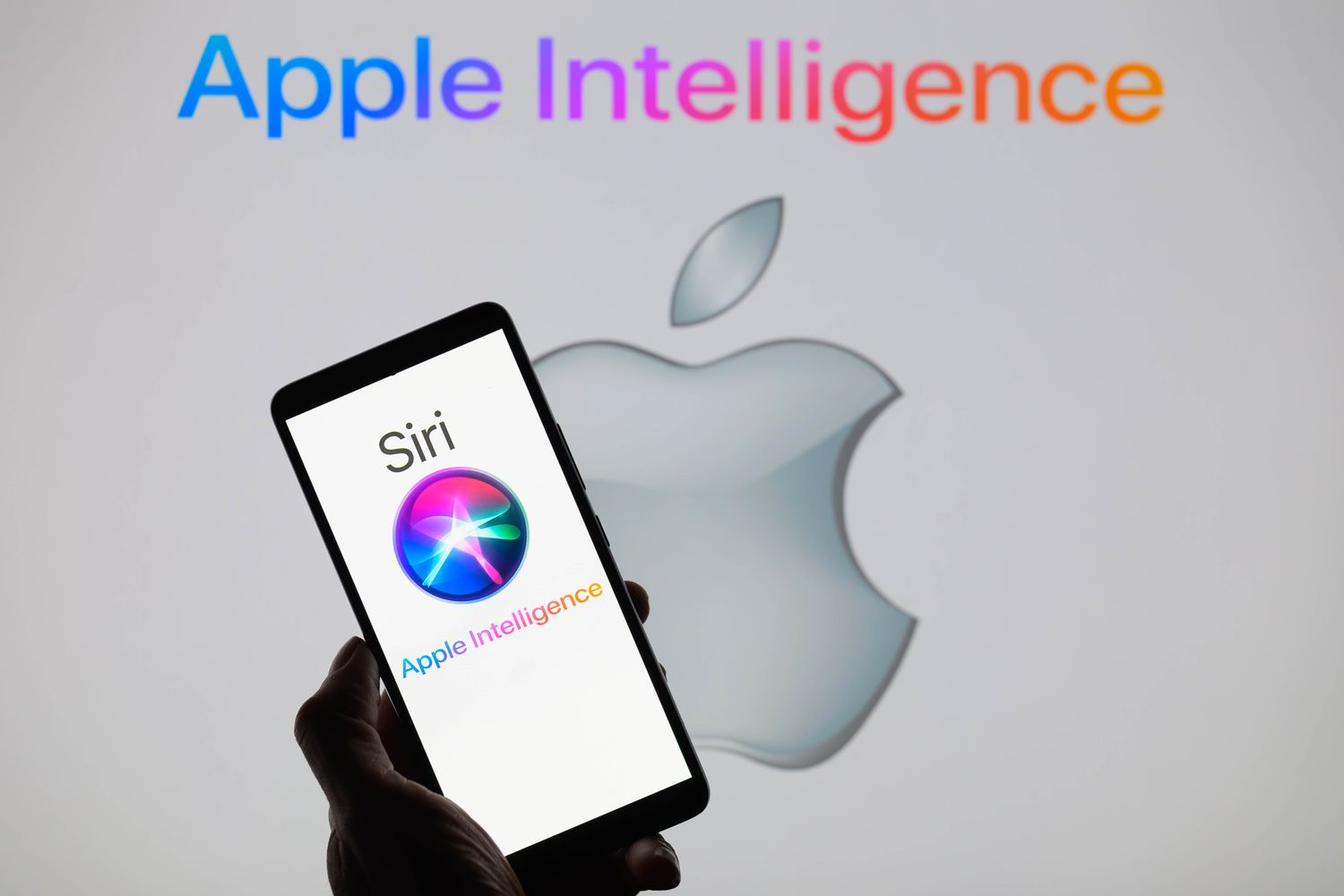
    Today at WWDC 2026, Apple unveiled a rebuilt Siri. The rebuilt assistant arrives as a standalone app on iPhone, iPad, and Mac, functioning as a conversational chatbot alongside its existing system-wide presence. It can draw on personal context to search across messages, emails, and photos, execute multi-step commands across apps, answer questions about what is on screen, and go out to the web for up-to-date information.

    That’s the product. But the context around it is what makes this worth thinking about.

    The Promise That Broke First

    When Apple showed off a smarter Siri at WWDC 2024, the company did something it almost never does: it sold something that didn’t exist yet. Plaintiffs in the lawsuit argued the company’s marketing went well beyond what the technology could deliver, saturating the airwaves to build consumer expectations that these AI features would ship with the phone.

    They didn’t.

    Apple’s whole brand identity is built on a specific idea: that the product you hold in your hands is exactly what Apple said it would be. The tagline isn’t “coming soon.” The aesthetic isn’t rough draft. For decades, Apple’s marketing worked precisely because the gap between the ad and the experience was essentially zero.

    The Siri situation broke that. And a lot of people noticed.

    The lawsuit alleged that Apple exaggerated the breadth of features Apple Intelligence would bring, creating the impression that advanced AI capabilities would be available to users sooner than they actually were. Consumer protection lawsuits don’t happen in a vacuum. They happen after enough people feel misled that someone decides it’s worth filing. And $250 million settlements don’t happen when a company thinks it will win.

    What Today Actually Means

    At WWDC, Cook framed the event as a reckoning with a two-year gap between promise and delivery on artificial intelligence.

    That framing matters. He didn’t come out swinging. He didn’t do the thing brands usually do, which is speed past the failure toward the shiny new thing. He named the gap. It was the first honest thing Apple has said about Siri in two years, and it landed differently because of it.

    The new Siri runs on a three-tier architecture that routes queries between on-device models, Private Cloud Compute, and a custom 1.2-trillion-parameter Gemini model. At each step, Apple anonymizes and tokenizes queries so neither Apple staff nor Google can link requests to individual users. Google is contractually barred from using these query streams to train future models.

    Apple could have announced this without any of that context. Just a new product, new capabilities, new features. Instead, the whole keynote carried the weight of a company trying to get back to even.

    Apple Intelligence had become, in the words of Futurum Group CEO Dan Newman, “one of the big black eyes” of Cook’s tenure. WWDC was Cook’s last chance to show a turning point before Ternus took over.

    That’s the pressure this product launched under. Not competitive pressure from Samsung. Trust pressure from Apple’s own customers.

    Why Brands Struggle to Recover from Broken Promises

    Most brands that overpromise don’t actually face real consequences. The news cycle moves. People forget. A new product comes out.

    Apple is different because trust is structural to what it sells. You don’t buy an iPhone because it has the best specs. You buy it because Apple has historically earned the right to charge a premium by delivering exactly what it promises, reliably, year after year. The promise is the product.

    When the promise breaks, the math changes. Suddenly the premium requires justification. And justification is a much harder job than trust, because trust is built quietly over time and broken loudly in a moment.

    What’s interesting about today is that Apple didn’t try to paper over it. Cook has led WWDC keynotes since 2012, and Monday’s event carried the weight of a farewell tour, complete with a standing ovation from the developer audience. He wiped a tear at the end. A CEO’s last act before handing over the company he rebuilt from near-bankruptcy. And the subject at the center of it was a two-year failure in AI.

    That’s not a PR problem dressed as a product launch. That’s a real reckoning.

    The Credibility Architecture

    The part of today’s announcement that most people will read right past is actually the most important part, from a brand standpoint.

    Apple’s Private Cloud Compute system has three verifiable properties: user data is never stored, it is used only to fulfill the immediate request, and third-party security researchers can independently inspect the production software running on those servers. Apple published the full Private Cloud Compute software image in a transparency log and offers security bounty payouts for verified vulnerabilities.

    That’s Apple saying: don’t take our word for it. Check our work.

    For a company that spent the better part of two years asking people to trust features that didn’t ship, this is the right move. You can’t rebuild credibility with another ad. You rebuild it by making the thing verifiable. By letting outsiders poke at your claims. By showing receipts.

    This is the difference between a brand that says “trust us” and a brand that builds systems that don’t require you to.

    Apple and Google issued a joint statement saying that Apple Intelligence will continue to run on Apple devices and Private Cloud Compute, maintaining Apple’s privacy standards. Tim Cook reinforced this on an earnings call earlier this year. And now it’s independently validated by outside researchers.

    That’s not marketing. That’s architecture as credibility.

    What John Ternus Inherits

    Apple’s foldable iPhone is expected to launch as early as fall 2026, meaning Ternus could unveil his first major new product category within weeks of taking the CEO role. He inherits a company that is simultaneously the most valuable on Earth and two years behind on the technology that investors believe will define the next decade.

    That’s a genuinely difficult position to start from. iPhone sales are strong. The stock is near record highs. By most measures, Apple is thriving.

    And yet Ternus walks in the door with an AI story still being proven out, a Siri that just launched its do-over, and a customer base that is maybe a little less automatically trusting than it used to be.

    The opportunity is real. The rebuilt Siri is a genuinely capable product by all early accounts. The privacy architecture is more thoughtful than anything Google or Microsoft has offered publicly. And the willingness to admit failure, something Apple almost never does in a keynote, may turn out to matter more than the product specs.

    But the clock on “we fixed it” is short. Ternus will have one, maybe two product cycles before people stop extending Apple the benefit of the doubt on AI and start demanding to see it working.

    The Actual Lesson Here

    The AI capabilities in today’s Siri are impressive, but they’re almost beside the point for this particular moment.

    What matters is that Apple is standing on a stage in 2026 delivering a product it promised in 2024, after a $250 million settlement, with its CEO making his final public appearance before handing over the company he spent 13 years running.

    The product is the apology. The architecture is the proof. The framing is the strategy.

    Apple said it resolved the lawsuit to stay focused on doing what it does best. That line is easy to dismiss as corporate spin. But there’s something true in it. What Apple does best is close the gap between what it promises and what it delivers. For about two years, it didn’t. Today was the company trying to get back to that.

    Whether it worked is something you’ll feel the next time you talk to Siri and it actually does what you asked.

    That’s the only measurement that matters.
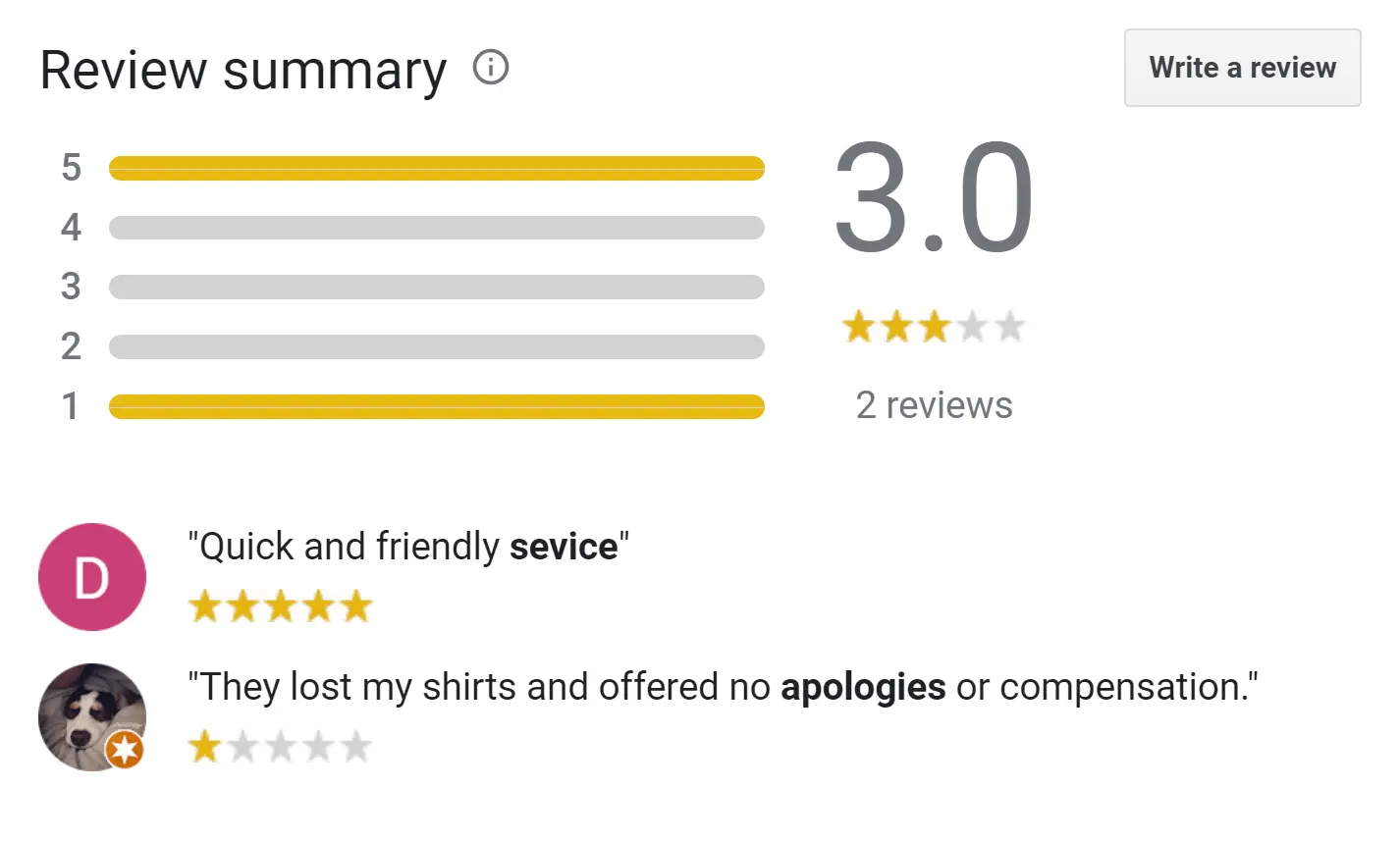
  • Why Google Review Stars Make or Break a Business

    Why Google Review Stars Make or Break a Business

    There’s a small moment that happens dozens of times a day, on phones everywhere, that almost nobody thinks about consciously.

    Someone is hungry. Or they need a plumber. Or they’re looking for a dentist in a new town. They pull up Google, scan the results, and in about three seconds, they’ve already eliminated most of their options. They didn’t read menus. They didn’t visit websites. They looked at a number, a single decimal, and moved on.

    That number is doing more work than most business owners realize. And the counterintuitive part? The businesses with the highest possible number aren’t always the ones winning.

    Research consistently shows that a 4.5 or 4.6 star average outperforms a perfect 5.0 when it comes to clicks and actual conversions. Not sometimes. Routinely. And the reason why tells you something interesting. Not just about reviews, but about how trust actually works in the human brain.

    The number everyone’s chasing might be the wrong number

    Ask any small business owner what they want from their Google reviews and they’ll tell you: five stars. All of them. It makes sense on the surface. More is better. Perfect is best. Get every customer to leave a glowing review and you win.

    Except that’s not how it plays out.

    The Medill Spiegel Research Center at Northwestern University studied purchase behavior across more than 100,000 products and found that purchase likelihood peaks in the 4.0 to 4.7 range and then begins to drop as ratings approach 5.0. Edward Malthouse, the center’s Research Director, put it plainly: “When consumers see all five-star reviews, they become skeptical that it’s too good to be true, that there’s some manipulation happening.”

    BrightLocal’s Local Consumer Review Survey, which has tracked consumer review behavior since 2010, consistently finds that most people are skeptical of businesses with a perfect score, especially when that score is built on hundreds of reviews.

    And PowerReviews data cited in that same Spiegel research found that 46% of shoppers are suspicious of perfect 5-star ratings. Among Gen Z, that number climbs to 53%.

    A 4.6 feels earned. A 5.0 starts to feel managed. That’s the gap, and it matters.

    Why consumers treat a 5.0 like a warning sign

    We’ve all been burned enough times by things that looked perfect on paper. The hotel with nothing but glowing reviews that turned out to be in a rough neighborhood. The restaurant with a flawless rating that actually had so-so food. The contractor who came highly recommended and then disappeared halfway through the job.

    People have developed a kind of mental fraud detector. It’s not always conscious, but it’s there. When something looks too clean, too uniform, too good to have any cracks, a part of the brain goes: wait.

    A perfect 5.0 with 400 reviews doesn’t read as “this place is exceptional.” It reads as “someone has been working very hard to make this look perfect.” That’s a different thing entirely, and people sense the difference even when they can’t articulate it.

    There’s a concept in psychology called cognitive fluency, which describes how easily the brain processes information. We tend to trust things that feel real and natural. A 4.6 with a handful of 3-star reviews tucked in feels real. It feels like actual customers with actual experiences. The imperfection is the signal of authenticity.

    A 5.0 breaks that fluency. It’s too smooth. And smooth, in the context of trust, reads as suspicious.

    The filter that runs before you even know you’re deciding

    Here’s what’s actually happening in those three seconds on Google Maps.

    You’re not evaluating restaurants. You’re eliminating them.

    There’s a meaningful difference. Evaluation is slow, deliberate, and effortful. Elimination is fast, automatic, and almost invisible. The brain doesn’t want to read through twelve restaurant listings when it’s hungry. It wants to cut the field down to two or three options and then make a real decision.

    Star ratings are the first filter in that elimination process. A business that falls below the threshold (somewhere around 4.0, though it varies by category and market) gets removed from consideration before anyone reads a single review. The photos don’t matter. The menu doesn’t matter. The thoughtful owner response to a bad review doesn’t matter. None of it matters if the number didn’t clear the bar.

    This is why stars function less like a report card and more like a price of entry. You don’t earn stars to get graded. You earn them to stay in the game. To remain visible. To exist, from the customer’s perspective, at all.

    What most businesses don’t realize is that they’re pouring resources into things that come after the filter. Better photos. Better menu descriptions. A new website. A faster response time. All of that matters, but only for the people who didn’t already eliminate you in the first three seconds. The star rating is the gate. Everything else is what’s behind it

    What a 4.6 actually signals to a stranger

    Think about what it means when you see a 4.6 with 312 reviews.

    It means a lot of people showed up, experienced the place, and thought it was worth saying something about. It means most of them left happy. It means a few didn’t, and their experience is visible. Not buried, not hidden, just there. It means the place has been around long enough to accumulate a real body of evidence.

    That’s the signal. And what it communicates, underneath the number, is this: other people tried this and it was fine. I can try it too.

    That transfer is what old-school word of mouth used to do. When a friend told you about a restaurant, they were lending you their risk tolerance. They’d already made the choice. They’d already had the experience. You were borrowing from that. The recommendation had value because it reduced your uncertainty.

    Google reviews do the same thing at scale. Strangers become the functional equivalent of that friend. You don’t know them, you’ll never meet them, but enough of them agreeing on something creates a kind of synthetic familiarity. The volume substitutes for the relationship.

    A 4.6 communicates something a 5.0 can’t: that this business has served real people with real expectations, and most of them walked away satisfied. That’s persuasive in a way a perfect score just isn’t.

    Google reviews have become the new word of mouth, and that changes everything for local business

    There was a time when a restaurant lived or died by what the regulars told their friends. You couldn’t manufacture it. You couldn’t buy it. It grew slowly, organically, through actual experiences passed from person to person in actual conversation.

    That system had limits. It was slow, local, and depended on having customers who were both happy and talkative. But it had something reviews are still trying to replicate: trust built through real relationship.

    Google reviews democratized that system. They made word of mouth searchable, aggregatable, and scalable. They gave every business a public reputation score visible to anyone who looked. And they put that score on the same screen where people make decisions, at the exact moment they’re making them.

    BrightLocal’s historical review data shows that at its peak in 2016 and 2017, 84% of consumers said they trusted online reviews as much as personal recommendations. That trust has shifted since, but the dominance of Google as a review platform has only grown. According to BrightLocal’s 2025 survey, Google remains by far the most used platform for reading reviews, and the gap between it and every other platform keeps widening.

    The result is that local businesses now live inside a reputation infrastructure they don’t fully control but absolutely can’t ignore. A restaurant in Naperville competes not just on food and service and location, but on a decimal point that appears before a stranger ever walks through the door. A plumber in Phoenix can lose jobs to a competitor with a 4.4 rating versus their 3.9, even if the actual quality of the work is identical.

    And then there’s the AI layer, which has made this even more consequential. BrightLocal’s most recent data on AI and local search found that the share of consumers using AI to find local business recommendations climbed from 6% in early 2025 to 45% by mid-2026. Your reviews aren’t just influencing human decisions anymore. They’re training what the machine recommends. The audience for your reviews has quietly doubled, and one half of it never reads the actual words. It just reads the patterns.

    How this changes the way you should think about your reviews

    Most businesses approach reviews as a reputation management problem: get more, suppress the bad ones, respond to the ones that can’t be removed. That framing is understandable but a little backwards.

    Reviews aren’t a PR problem. They’re a trust infrastructure.

    The goal isn’t to look perfect. The goal is to look believable. And the most believable version of your business is one that has mostly satisfied customers and occasional honest feedback, including the critical kind, handled with visible accountability.

    A business with 400 reviews at a 4.6 that responds thoughtfully to its 3-star reviews is signaling something important: we’re here, we’re listening, and we take this seriously. That’s more trust-building than a 5.0 with no negative reviews and no responses at all.

    The counterintuitive reality is that a bad review, responded to well and visibly, can outperform a missing bad review when it comes to consumer trust. People don’t expect perfection. They expect responsiveness. The businesses that understand this don’t just chase stars. They build the kind of review profile that tells a believable story about who they are.

    That’s harder than gaming a rating. It’s also more durable.

    The bigger idea: authenticity is a conversion strategy, not a PR phrase

    The lesson from the 4.6 versus 5.0 story isn’t really about review scores. It’s about what makes things believable.

    We live in an era of maximum polish. Every brand is optimized. Every social media profile is curated. Every product page is A/B tested for maximum conversion. The internet has become so good at looking good that people have recalibrated what they trust. Smooth isn’t trustworthy anymore. Smooth is suspicious.

    What earns trust now is visible imperfection handled honestly. The business owner who responds to a rough review with genuine accountability. The brand that admits a product isn’t right for everyone. The restaurant that has a 4.6 because it’s genuinely a 4.6. Good, reliable, occasionally imperfect, and real.

    That’s the value hidden in those decimal points. They’re tiny signals of believability, compressed into a number that people read in less time than it takes to blink.

    The businesses that figure this out stop trying to be perfect and start trying to be trustworthy. Turns out those are different goals. And only one of them actually converts.

  • The CEO Who Called His Burger a “Product” (And the One Who Didn’t)

    The CEO Who Called His Burger a “Product” (And the One Who Didn’t)

    There’s a clip going around of McDonald’s CEO Chris Kempczinski eating a Big Arch burger. He takes a small, careful bite. Then he looks at the camera and calls the burger a “product.”

    Not a burger. A product.

    That one word became the story. People in the comments clocked it immediately. “First time he’s ever tried it,” someone wrote. Another person noticed it was the smallest first bite they’d ever seen from someone who was supposed to be selling the thing. The clip was meant to promote McDonald’s newest sandwich. Instead it became a case study in what happens when the gap between how a company talks internally and how it talks to customers accidentally goes public.

    Meanwhile, Burger King’s U.S. and Canada president Tom Curtis had posted a video of himself eating a Whopper. He looked like a person who was actually hungry. He’d already given out his personal cell number a few weeks earlier. He was personally calling customers back. His wife had reportedly banned the calls from inside the house.

    The internet, predictably, noticed the contrast.

    What Burger King Was Already Doing Before the Internet Noticed

    This is the part most coverage missed, and it matters a lot.

    The Burger King Whopper bite video wasn’t a reaction to Kempczinski’s stumble. BK’s CMO Joel Yashinsky told Adweek the timing was “fortuitous,” because they had already shot the content weeks earlier, as part of a broader platform shift they had been building for months. The video existed before the McDonald’s moment ever went viral.

    The cell phone number thing started February 17. Curtis posted his real number online and invited customers to text or call with feedback. By February 26 — nine days later — Burger King had already updated the Whopper bun based on what it heard. New bun. New squish-proof box for the sandwich. Real changes, made fast, because people actually called.

    By the time the Kempczinski clip went viral and Burger King reposted Curtis’ Whopper video to TikTok with the caption “Thought we’d replay this,” it wasn’t reactive genius. It was operational credibility that happened to be camera-ready. That’s a different and more interesting story.

    The company had received over 35,000 calls and texts. Curtis had personally responded to 2,000 of them. His quote about why it worked captures something worth paying attention to: “Every time you talk to a guest, you’re not just talking to one person. You’re talking to their family and their friends. When someone says, ‘You’re not going to believe who I talked to today,’ that becomes part of how you build the brand.”

    He went to bed a pizza delivery guy. He woke up as president of Burger King. That kind of humility, whether it’s performed or genuine, is what people are picking up on right now.

    Why “Product” Landed So Badly

    The word itself isn’t the problem. Kempczinski probably says “product” in every leadership meeting. It’s a normal internal word for a food company. The problem is that he said it out loud, on camera, while eating a burger, talking directly to customers.

    There’s a useful framework for understanding why that felt so off. When something sounds technically correct but feels wrong, it’s usually because the language is calibrated for the wrong audience. Kempczinski was in front of a camera talking to people who eat at McDonald’s and love McDonald’s. His brain defaulted to boardroom language. “Product” is what you say to an investor. It is not what you say to someone who eats a Big Mac every Friday.

    The result was a kind of cognitive dissonance that people felt but couldn’t fully explain. So they explained it with memes. The comment sections started doing the analysis for him, and none of it was flattering.

    This is how authenticity failures work now. They don’t get a correction. They get a clip, a TikTok, a side-by-side comparison with somebody else doing the same thing better. Newsweek ran the comparison and pulled in over 3 million Instagram views. The contrast did the work.

    The Oscars Ad Was the Period at the End of the Sentence

    In March, Burger King ran a 90-second ad during the Oscars. Curtis narrated it himself. The ad is unusual because it is one of the only major fast food ads in recent memory that openly acknowledges the brand lost the plot.

    “There was a time Burger King used to be King. Somehow, somewhere, fast food just fell off. Us included. And that’s not good. So we started listening. I even gave my number out.”

    He lists the complaints. Old restaurants. Slow service. Simple mistakes. TikTok reviews flash on the screen. He says they fired the King mascot — the creepy one — and replaced the king with the customer.

    The ad was created with agency OKRP. Their EVP Matt McNulty described it as trying to document a “real, years-long story of co-creating the future of Burger King with guests.” Executive creative director Ben Pfutzenreuter said it had to feel “real, transparent, and human. Because it is.”That framing matters. This isn’t Burger King pretending to care. The infrastructure for actually caring — a president taking calls for four hours a day, feedback loops reaching franchise owners within 15 minutes of a complaint — had been running for years before anybody made an ad about it. That’s why the ad works. It has receipts.

    The Domino’s Shadow Nobody Is Talking About

    Curtis came from Domino’s. He was in senior leadership there in 2010 when the company did something almost identical — and became the textbook case for brand turnaround marketing.

    Domino’s ran ads in 2009 that admitted their pizza was bad. The CEO said it on camera. The company shared the negative customer reviews. Sales went up 14.3 percent in Q1 2010, according to research by Millward Brown. The stock went from around $3 a share to over $400 in the decade that followed.

    The parallel isn’t perfect. Domino’s was in a deeper hole than Burger King is right now, and Burger King’s recovery is still unfolding. But Curtis watched that campaign from the inside. He knows what happens when you build honesty into the product, not just the advertising.

    That context makes the phone number less of a stunt and more of a philosophy. Curtis told BuzzFeed that he sees the calls as modeling behavior. When the president picks up the phone, franchisees start posting their own numbers inside restaurants. The behavior spreads.

    What This Actually Tells Us About How Brands Win Right Now

    The fast food burger wars in 2026 are a decent illustration of something broader.

    People have gotten really good at detecting the gap between what a company performs and what it actually does. The tells are small. A careful bite. The wrong word. A response that reads like it was drafted in a legal review. None of it is technically dishonest, but all of it registers as off.

    The brands that are winning aren’t necessarily doing something radical. They’re just doing the obvious thing for real instead of performing it.

    Curtis drives through Burger King locations. He listens to calls about broken signs in Montana. His wife bans the work calls from inside the house. These details travel because they feel true in the way that most branded content doesn’t. You can’t fake the Montana sign story. You can’t manufacture a wife who won’t let you take calls in the living room.

    McDonald’s, for its part, is still the most valuable fast food brand in the world by a significant margin — around $42.6 billion in brand value to Burger King’s $4.8 billion. Its same-store sales were growing at a faster clip than Burger King’s going into this moment. This story doesn’t end with Burger King dethroning anyone.

    But in the specific war for attention and credibility happening on TikTok and in comment sections, Burger King walked into 2026 with better ammunition. Not because they were smarter. Because they were already doing the work.

    The viral moment didn’t make them look good. They were already doing something that made them look good. The viral moment just showed it.

    That’s the difference between a strategy and a lucky break. And it’s the difference most marketing departments will argue about for the next two years.

  • Meta Overtook Google in Ad Revenue in 2026. Here Is What Actually Happened, and Why It Changes Everything About How Advertising Works.

    Meta Overtook Google in Ad Revenue in 2026. Here Is What Actually Happened, and Why It Changes Everything About How Advertising Works.

    Google has been the biggest advertising business in the world for longer than most people working in marketing have had their jobs.

    That changed in 2026.

    Meta is now forecast to pull in $243.46 billion in net worldwide ad revenue this year. Google lands at $239.54 billion. The gap isn’t huge yet, but the direction is. Meta’s ad revenue is growing at 24.1% annually. Google’s is growing at 11.9%. You don’t need a spreadsheet to see where this goes.

    Most coverage of this story stopped at the revenue number. That’s the wrong place to stop. How Meta got there is the part that should actually change how you think about advertising.

    The Number That Just Changed the Advertising Industry

    For twenty years, the logic of digital advertising was straightforward. Google controlled intent. You searched for a product, Google knew exactly what you wanted, and it showed you an ad that matched that moment. The advertiser picked keywords. Google ran the auction. Everybody understood the deal.

    That model made Google dominant in a way that felt almost permanent. By the time Facebook was building its ad platform in the early 2010s, most marketers treated Google as the default and everything else as supplemental.

    Meta’s 2026 forecast ending that run isn’t just a business story. It’s a signal that the entire logic of where advertising value lives has shifted. Google built its business on knowing what you were looking for. Meta built something that claims to know who you are before you go looking for anything. And increasingly, advertisers are paying more to reach people before the search happens than after it.

    The gap will keep widening. The underlying forces driving it have been building for three years.

    Why Google’s Business Model Is Now Working Against Itself

    There’s a strange bind Google is caught in right now, and most people haven’t fully absorbed how uncomfortable it is.

    Google’s AI Mode is genuinely useful for users. Ask a complex question and you get a synthesized answer instead of ten links to wade through. That’s a better product by almost any measure. The problem is that better answers produce fewer clicks, and clicks are what fund the business.

    Google Network ad revenue fell 4% in Q1 2026 as AI reshaped how people use search. That matters because third-party publishers and sites that rely on Google for traffic are starting to see what a world with fewer clicks looks like, and it’s not good for them or for the ad inventory that Google sells on their behalf.

    The cost side makes it worse. An LLM-based search response can cost roughly ten times more to serve than a standard web search. Google is spending more to deliver a product that generates fewer of the clicks its advertisers are paying for. That’s not a temporary friction. That’s a structural problem.

    To be clear, Google isn’t going anywhere. Search advertising remains one of the most efficient forms of marketing ever invented, and Google still dominates it. But the confident growth story that defined Google’s ad business for two decades now has a real ceiling on it, and the ceiling is getting lower every quarter that AI answers replace clicks.

    What Advantage+ Actually Did to the Advertising Industry

    The single biggest driver of Meta’s growth is a product called Advantage+. Understanding what it actually does explains almost everything else.

    The traditional way to run a Facebook or Instagram ad campaign looked roughly like this: a media buyer picks an audience, writes copy and headlines, uploads creative assets, sets a bid strategy, defines placements, monitors performance, adjusts manually. A competent media buyer could spend a week setting up a single campaign properly. Agencies built entire practices around doing this well.

    Advantage+ inverts that. You give the AI a business goal and a budget. It decides who should see the ad, how much to bid, where to place it, and, increasingly, generates multiple versions of the creative itself. The AI isn’t assisting the campaign manager. It largely replaces the campaign manager for execution-level decisions.

    Mark Zuckerberg’s stated vision for where this goes is blunt: give Meta a URL and a goal, and it handles the rest. The annual revenue run rate for Meta’s AI-powered ad products, including Advantage+, has already surpassed $60 billion. Advantage+ Sales Campaigns deliver an average 22% lift in return on ad spend. The number of advertisers using at least one of Meta’s video-generation tools jumped 20% in a single quarter.

    Those aren’t incremental improvements to an existing product. That’s a new product category.

    Small businesses that previously couldn’t afford to hire an agency or a media buyer are now running competitive paid campaigns. Mid-size brands that were getting outperformed by larger competitors with dedicated ad teams are closing the gap. The barrier to entry dropped fast, and when barriers drop, markets expand.

    Creative Is the New Targeting (And Most Brands Haven’t Figured That Out Yet)

    Here’s the part of this shift that most brands and agencies are still sleeping on.

    When Advantage+ runs a campaign, the algorithm doesn’t wait for you to tell it who to target. It infers the audience from the creative itself. Your ad decides who sees it, not the other way around. Restricting the algorithm with narrow audience parameters tends to backfire. CPMs go up, efficiency drops, and the algorithm underperforms because it’s being forced into a box that’s smaller than the one it wants to work in.

    Meta’s Andromeda ad delivery system, which powers Advantage+, is essentially reading the content of your ad and matching it to people whose behavior suggests they’re likely to respond. If your ad shows a 40-year-old woman using a skincare product in a way that feels aspirational and relatable to women in that demographic, the algorithm picks up on those signals without you having to specify them.

    What this means in practice is that targeting skill, which used to be the thing that separated good media buyers from great ones, is no longer the primary lever. The algorithm handles the targeting. You can’t out-optimize it with manual audience settings. What you can do is give it better material to work with.

    By 2026, creative quality accounts for more than 50% of Meta Ads performance. That’s not a soft claim about brand aesthetics. That’s a measurable, data-backed shift in what drives results. The brands and direct-to-consumer companies doing well on Meta right now, companies like Pattern Beauty, True Classic, and AG1, are winning on volume and velocity of creative testing, not on audience segmentation skill. They’re putting more ads into the system, testing faster, and replacing tired creative before the algorithm has to compensate for declining engagement.

    The death of the “winning ad you run for 18 months” is real. The algorithm tells you when creative is fatiguing. The competitive advantage now belongs to whoever can make more good things faster, not whoever can fine-tune an audience segment most precisely.

    What This Power Shift Means if You’re Not a Media Buyer

    Zoom out from the media buying mechanics for a second, because there’s a bigger question underneath all of this.

    If the algorithm decides who sees your ad, and AI tools increasingly generate the ad itself, what exactly is the brand doing? Where does brand identity live in a system built to optimize for short-term response signals?

    This isn’t a theoretical concern. Advantage+ optimizes for conversions. It is very good at getting people to click and buy. It is not designed to optimize for how people feel about a brand three years from now. Nike’s brand equity wasn’t built by an algorithm deciding who should see what. It was built by decades of creative decisions that accumulated into something people felt. Those two things can coexist, but they require very different intentions and very different types of investment.

    For small businesses with no marketing team, the answer is probably simple: let the algorithm do its job and appreciate that you have access to a tool that genuinely levels the field. For a brand trying to build something that lasts, the answer is harder. Automation can distribute your message at scale. It can find the people most likely to respond right now. What it can’t do is decide what your brand actually stands for, or whether the people who buy from you today will still care about you in five years.

    These are separate problems. The risk is treating Advantage+ as a solution to both when it’s really only designed to solve one.

    The Thing That Doesn’t Change

    Advertising used to require skill. Strategy. Expertise. You had to know where people were, what they wanted, and how to say the right thing in the right moment. Meta’s Advantage+ is selling the promise that you no longer need most of that. You just need a goal and a budget.

    The numbers suggest it often delivers.

    But there’s something worth watching in the gap between “the algorithm can find your audience” and “the algorithm can build your brand.” Delivery isn’t persuasion. Reach isn’t trust. Meta can put your ad in front of the right person at the right moment. What happens in the seconds after that impression depends on something the AI didn’t write.

    Google built its dominance on knowing what you were searching for. Meta is building its dominance on knowing who you are. Both are remarkable feats of inference. Neither one closes the loop on the oldest problem in advertising, which is making a person feel something real enough to act on it.

    That part is still yours.


    Frequently Asked Questions

    What is Meta Advantage+ and how does it work? Meta Advantage+ is an AI-powered ad automation product that manages audience targeting, bid optimization, placement, and creative variations on behalf of advertisers. Instead of manually configuring a campaign, advertisers provide a budget and business goal, and Advantage+ handles execution. It has surpassed a $60 billion annual revenue run rate as of 2026.

    How did Meta overtake Google in advertising revenue? Meta is forecast to generate $243.46 billion in net global ad revenue in 2026, compared to Google’s $239.54 billion. Meta’s growth has been driven primarily by Advantage+ and AI-powered ad tools that lowered the barrier to advertising for small businesses and expanded the total advertiser base significantly.

    Is Google losing its advertising dominance? Google remains the dominant player in search advertising, but its Network ad revenue fell 4% in Q1 2026, and AI Mode is creating structural tension between a better user experience and the click-based model that funds its advertising business. Growth has slowed significantly relative to Meta’s pace.

    What does “creative is the new targeting” mean? In Meta’s Advantage+ system, the algorithm infers the target audience from the ad creative itself rather than relying on manually selected audience parameters. The implication is that the quality, relevance, and emotional resonance of the ad determines who sees it, making creative output the most important variable in campaign performance.

    What does Meta’s ad growth mean for brands and advertisers? It means the expertise required to run effective paid social campaigns has shifted. Technical targeting skills matter less. Creative volume, speed of testing, and the ability to produce high-quality ad content consistently matter more. Brands that are built on strong creative instincts are better positioned than those that relied primarily on media buying precision.

    Should I shift my ad spend from Google to Meta? It depends entirely on your business and customer journey. Google search advertising still captures high-intent buyers who are actively looking for what you sell. Meta advertising is better for building demand before that intent forms. Most brands with meaningful budgets benefit from both, and the question is usually how to allocate between them based on what stage of the funnel you’re trying to influence.

  • Why People Slept Outside a Store for a $400 Watch That Looks Like a $35,000 One

    Why People Slept Outside a Store for a $400 Watch That Looks Like a $35,000 One

    It’s 4 a.m. on a Manhattan sidewalk in the middle of may. Thousands of people are waiting in line for a brand new watch collaboration. The AP x Swatch collab that has been hyped for the past several months. People have been camping on the sidewalks on New York City for days and if you leave your spot; you lose it. Many paid others to hold their spot and a few people had already collapsed.

    What they’re waiting for is a pocket watch. Not a wristwatch. A pocket watch. Eight colors. $400.

    Inside it sits the same Swatch movement that’s been powering budget timepieces for over a decade. The case borrows the Royal Oak’s signature octagonal bezel with exposed screws. The dial uses AP’s chequerboard tapisserie engraving. It looks, at a glance, like something that costs $35,000. It doesn’t. But the people on that sidewalk knew that. They came anyway.

    By the time Swatch stores opened on May 16, police had deployed tear gas in Paris and pepper spray was used at Roosevelt Field Mall on Long Island. There was at least one arrest. In Dubai, two Swatch locations cancelled the entire launch because crowds had grown too big to safely manage. Swatch posted to Instagram asking customers not to rush stores, clarifying that the Royal Pop collection would remain available for months.

    That clarification matters. We’ll get back to it.

    What Actually Happened on May 16

    The scale of it was global and a little absurd. Tokyo’s Ginza location had a line of over 300 people overnight. Shibuya and Harajuku were close behind, each drawing 150 to 180 hopefuls. London, Milan, Paris. Police and dogs. City by city, the same scene. People filming from across the street.

    The object at the center of it all: eight mechanical pocket watches, $400 each, one per customer, in-store only, no pre-orders, no online sales.

    The Royal Pop borrows its design language directly from the Royal Oak, one of the most recognizable watches in the world. The Royal Oak starts around $25,000 at retail. And even at that price, you don’t just walk in. There are waitlists. Years of purchase history. Relationships with authorized dealers who get to decide whether you’re the right kind of buyer. AP runs one of the most deliberately supply-constrained operations in watchmaking.

    So when AP puts its design language on a $400 object and says anyone who shows up can have one? You get Times Square.

    This Is Not About a Watch

    The watch is a prop.

    What the people in that line were actually buying was access to something they’d been locked out of their entire adult lives. A ticket into a world that had always made clear, through pricing and scarcity and dealer gatekeeping, that they were not the intended audience.

    Think about what the Royal Oak actually costs someone who isn’t wealthy. Not just $25,000. It costs years of cultivating a relationship with an authorized dealer. It costs the social capital of knowing how that world works. It costs the kind of patience that only makes sense if you’re already comfortable financially and see a Patek or an AP as part of your future identity.

    Most of the people sleeping on that sidewalk would never own a Royal Oak. They knew it. And then, for one weekend, a door opened.

    What they bought at $400 wasn’t a movement with 51 components. They bought hype, design identity, resale potential, and the feeling of belonging to something they’d been watching from the outside. The watch is evidence. A receipt. Something you can wear around your neck or set on your desk that says: I was there, I got one, I’m part of this.

    The Scarcity Playbook, and Why It Has an Expiration Date

    The formula Swatch used here isn’t new. In-store only. One per customer. No pre-orders. A deliberate gap between visible demand and available supply. Every element of the launch was designed to make it feel like getting one required effort, luck, and timing. That friction is load-bearing. Remove it and you remove the desire.

    Swatch has done this before. The MoonSwatch in 2022 drew comparable scenes: crowds pressing against storefronts, resale markups at multiples of retail, fans on cobblestones at midnight. The playbook is repeatable.

    But here’s the context that doesn’t show up in the hype coverage.

    Swatch’s operating profit fell from over one billion Swiss francs in 2023 to 135 million Swiss francs in 2025. The operating margin shrank to 2.1 percent. With activist fund Greenwood Investors LLC pushing on the board, the company isn’t doing this collaboration because it felt like a fun creative moment.

    The Royal Pop is a financial rescue operation in the costume of a cultural one.

    That’s not a moral judgment. It’s just important to understand what’s actually happening when a brand engineers a moment like this. The desire feels organic because it looks organic. The people in line are genuinely excited. But the conditions creating that excitement were designed by people who needed it to work.

    The MoonSwatch story is also the cautionary tale here. By mid-2025, Swatch was among the worst-performing watch brands in terms of value retention, partly because of what it did after the initial MoonSwatch buzz. Monthly variants. Moonshine gold editions. Continual new colorways. Swatch essentially flooded the market with what had briefly felt rare, and diluted the scarcity that made the original eleven references feel special.

    Hype is a depletable resource. You can spend it carefully or you can spend it all at once.

    What the Resale Crash Tells You About How Hype Ends

    This is the part of the story that cuts cleanest.

    The first Royal Pop to hit the secondary market sold for $4,387. Less than 24 hours later, the same watch was trading at $1,218. A 72 percent crash in under a day.

    What happened? Swatch published a LinkedIn post: “We remind you that the Royal Pop Collection is not a limited edition.”

    That sentence did more damage to the resale market than any competitor could have. The moment scarcity was revealed as manufactured rather than real, the speculative premium collapsed. Buyers who had paid four times retail for the opportunity to flip the watch suddenly understood they’d paid for a belief, not a reality.

    The watch didn’t change. The product didn’t change. The information changed.

    This is what hype actually is, stripped down: a belief system with a price attached. When the belief holds, the price holds. When the belief breaks, the price falls fast. The crash wasn’t a market failure. It was the market working exactly as it should, correcting itself when new information arrived.

    Anyone who paid $4,000 for a $400 watch that was never going to stop being available for $400 bought the story, not the object. And when the story ended, they were left holding a very nice pocket watch.

    The Real Question: Does AP Win or Lose Here?

    This is where the collaboration gets complicated, and the answer isn’t clean.

    Audemars Piguet has been fighting to protect the Royal Oak’s octagonal design in courts around the world. In 2024, they lost in Japan. In 2025, the US Trademark Trial and Appeal Board ruled against them, finding the shape didn’t have enough distinctiveness to function as a standalone brand identifier on its own.

    If you can’t legally stop others from copying the design, maybe you commoditize it on your own terms first.

    There’s a version of this collaboration that reads as pragmatic brand defense. AP would rather put its name on a $400 Swatch than watch someone else produce a $400 Royal Oak knockoff without asking. This is the cynical read. It may also be the accurate one.

    But there’s a cleaner version too. The MoonSwatch boosted Omega’s cultural relevance significantly among younger collectors and casual watch enthusiasts who weren’t on the radar before. The theory is that a $400 AP-adjacent object functions as a gateway. You buy the Swatch at 26, you aspire to the real thing at 40. For AP, the collaboration is planting a long-term seed.

    Unlike Omega, AP isn’t part of the Swatch Group. It’s one of the most genuinely independent luxury watchmakers in existence. That independence made the collaboration feel unexpected. More controversial. More interesting than if it had been another Swatch Group internal project.

    The risk is real for AP. The need is urgent for Swatch. Both brands knew what they were walking into. Whether AP considers this a win five years from now depends entirely on what comes next.

    What This Means for Any Brand Thinking About Accessibility

    The lesson here isn’t “create scarcity.” That’s the surface read.

    The actual lesson is that people will do remarkable things to access something they’ve wanted for a long time when they’ve never had a legitimate path in.

    The queue wasn’t irrational. It was the first rational opportunity many of those people had ever had to own a piece of something they’d admired from a distance. AP doesn’t sell a watch movement. It sells the feeling of being someone who owns an AP. The Royal Pop extends that feeling down the income ladder without, in theory, diluting what the real thing means.

    That balance is harder than it looks. Swatch already lost it once with MoonSwatch by going back to the well too many times. Whether they’ve actually learned anything from that is the question the next collaboration will answer.

    For any brand thinking through the accessibility question, the real thing to examine isn’t pricing or distribution strategy. It’s whether you understand what you’re actually selling. If you think you’re selling a product, you’ll make product decisions. If you understand you’re selling a feeling, a belonging, a moment of legitimate access to a world that usually keeps the door closed, you’ll make very different ones.

    The people who waited eight days and got one. The people who waited eight days and didn’t. The people who paid $4,000 on resale and watched it drop to $1,200 the next morning.

    And the two brands who engineered all of it. One from financial necessity. One from a mix of brand confidence, legal pragmatism, and the calculated bet that desire, once created, is very hard to undo.

    The chaos outside every Swatch store that weekend wasn’t a side effect. The line was the product. The scenes were the campaign. The watch was almost beside the point.

    What does that tell you about how desire actually works?

    It tells you that people aren’t buying objects. They’re buying evidence that they belong somewhere they’ve always wanted to be.


    FAQ

    What is the Swatch x Audemars Piguet Royal Pop? The Royal Pop is a collection of eight mechanical pocket watches, priced at $400, created through a collaboration between Swatch and Audemars Piguet. The design draws directly from the Royal Oak, one of AP’s most iconic wristwatches, which typically starts at around $25,000 at retail.

    Why did resale prices crash 72% after launch? Shortly after launch, Swatch published a statement clarifying that the Royal Pop is not a limited edition and would remain available for months. That announcement collapsed the speculative resale premium almost immediately. Buyers who had paid $4,000+ on secondary markets saw prices drop to around $1,200 within 24 hours.

    Is the Royal Pop a limited edition? No. Swatch confirmed it is not a limited edition. The collection was available through normal Swatch store channels and production was not officially capped.

    Did Audemars Piguet damage its brand by collaborating with Swatch? That depends on the time horizon. In the short term, AP’s association with a $400 mass-market object created genuine controversy among watch collectors. But AP has also suffered recent legal losses in efforts to protect the Royal Oak’s octagonal design, which adds a layer of strategic logic to putting their own name on an accessible version. Long-term brand impact is still an open question.

    Why do people line up for expensive limited drops? The product is rarely the point. Drops like the Royal Pop offer access to a world most people have always been priced out of. The queue is the first legitimate door many buyers have ever been offered into a brand they’ve admired from a distance.

    What happened at Swatch stores on May 16? On May 16, 2025, Swatch launched the Royal Pop collection globally. Police deployed tear gas in Paris, pepper spray was used at Roosevelt Field Mall in New York, and two Dubai locations cancelled their launches due to crowd size. Lines in Tokyo exceeded 300 people overnight.

  • When People Can Tell the Ad Was Made by AI, They Stop Trusting the Brand

    When People Can Tell the Ad Was Made by AI, They Stop Trusting the Brand

    Picture this. You’re shopping for something that costs real money. A skincare product. A piece of furniture. A financial service. The ad finds you. It answers your exact question. The copy is clean, the visuals are polished, the message feels almost tailored to you.

    But something feels off.

    You can’t fully name it. The ad isn’t wrong. It just feels like no one was actually in the room when it was created. Like the brand didn’t really think about you. Like a machine ran the numbers and output the result, and that was good enough.

    You move on without buying.

    That feeling, the quiet erosion of trust, is now a data point. And it’s a significant one.

    A recent study found that when consumers perceive an ad as AI-generated, purchase intent drops by 14%. Premium brand perception falls by 17%. Those aren’t rounding errors. Those are numbers that should make any brand paying attention stop and ask a real question: what exactly are we losing when we take the human out of the creative process?

    The Numbers Brands Don’t Want to See (But Need To)

    The data keeps coming back to the same place.

    The IAB’s AI Ad Gap report from January 2026 found measurable consumer resistance forming around AI-produced creative. Klaviyo’s 2026 AI Consumer Trends Report found that only 13% of consumers say they fully trust AI-generated content from brands. Sprout Social found that 52% of consumers have active concerns about AI-generated advertising specifically.

    Put those together and you get a picture that’s hard to argue with. More than half the people seeing AI ads have concerns. Fewer than one in seven trust them fully. And when someone suspects they’re looking at AI creative, they’re significantly less likely to buy and significantly less likely to see the brand as premium.

    The question isn’t whether this matters. It clearly does. The question is why.

    Because the ads often aren’t inaccurate. They’re frequently well-made. The product information is correct. The visuals are competent. By almost every measurable standard, the ad does its job.

    And people still don’t trust it.

    Consider what happened with Levi’s in 2023, when the brand announced a partnership with Lalaland.ai to generate diverse model images. The backlash wasn’t about the quality of the images. People didn’t say the models looked fake or the clothes looked wrong. The reaction was about what the decision said about the company. Consumers felt that Levi’s had replaced real human representation, a value the brand had spent decades cultivating, with a cost-efficient workaround. The product hadn’t changed. The trust had.

    Why “Accurate” and “Trustworthy” Are Not the Same Thing in Advertising

    There’s a difference between believing something is factually correct and trusting the person saying it.

    You can read a product description and believe every word while still feeling nothing. Trust doesn’t come from accuracy. It comes from feeling like someone meant it.

    When a brand puts out an ad, the unconscious signal being sent is: we thought about you. Someone here made a creative decision because they believed it would connect with a real person. The ad is a proxy for human judgment.

    AI-generated creative, when it’s detectable, breaks that proxy. It signals the opposite. It says the brand ran an input, got an output, approved it, and moved on. No one sat with this. No one asked whether it was really right for the person seeing it. It was efficient.

    Consumers are surprisingly good at reading efficiency for what it is. They don’t always know what they’re picking up on. But they pick up on it.

    There’s a body of psychology around what researchers call perceived effort. People assign value to things partly based on how much effort they believe went into them. A handwritten note means more than a typed one. A custom design means more than a template. This isn’t irrational. Effort signals care. Care signals relationship.

    Patagonia has built an entire brand on this principle. Their advertising often looks understated, even rough around the edges. The photos feel like they were taken by someone who was actually on that mountain. The copy reads like someone wrote it after a long hike, not after a client brief. You feel the effort. You feel the attention. And you trust the brand more for it.

    When that kind of visible effort disappears from advertising, the relationship signal disappears with it.

    The Absence Signal: What Consumers Feel When Human Intention Isn’t in the Room

    The most important part of the trust problem isn’t what AI adds to an ad. It’s what AI removes.

    Human creative decisions carry invisible information. The choice of a specific word over another. The image that doesn’t take the obvious route. The tone that sounds like it came from someone who genuinely understood the experience of using this product. These aren’t just aesthetics. They’re signals that someone was paying attention.

    When those signals go missing, consumers don’t just notice a different visual style. They notice an absence. Something feels hollow in a way they can’t always explain.

    This is especially true for premium and aspirational brands. The 17% drop in premium perception makes complete sense once you understand this dynamic. Premium isn’t only about product quality. It’s about the story the brand tells about itself. Part of that story is: we care enough to do this thoughtfully.

    Think about the Apple “Shot on iPhone” campaign. What made it work wasn’t the technical specs it implied. It was the obvious human curation behind every image. Someone chose that photo. Someone stood in that field at that hour. The campaign communicated human attention at scale. It was premium precisely because of how deliberate it felt.

    Now think about a generic AI-generated ad for a luxury hotel. The visuals might be beautiful. The copy might be technically accurate. But if the consumer senses that no one chose any of it, that an algorithm assembled it from a prompt, the premium signal collapses. The brand is accidentally communicating that it didn’t think this interaction was worth a person’s time.

    For consumers deciding whether to spend real money, that signal matters more than most brands realize.

    Gen Z Is Most Skeptical and Also Most Important to Win

    There’s a generational dimension here that brands can’t sidestep.

    Gen Z, the demographic that grew up inside the internet, is both the most AI-literate and the most skeptical of AI in advertising. They spot AI-generated creative faster than older consumers. They’re also the most likely to actively pull back from a brand after spotting it.

    This surprises a lot of marketers. The assumption is that younger, more tech-forward consumers should be more comfortable with AI tools. But that’s not how it plays out.

    Gen Z didn’t just grow up with technology. They grew up watching brands use technology to manipulate them. Targeted ads. Algorithmic feeds. Dark patterns designed to extract clicks. They’ve developed a sharp instinct for recognizing when something is being done to them rather than for them.

    Glossier understood this early. Their marketing for years was built almost entirely on real customers, real skin, real voices. Not polished. Not perfect. Real. The aesthetic communicated: we trust you to handle honesty. Gen Z responded. The brand became a case study in audience loyalty precisely because the creative felt like it came from people, not from a production process.

    AI creative, even when technically impressive, reads the opposite way to this audience. It doesn’t feel like a brand speaking to them. It feels like a brand running them through a system.

    Winning Gen Z’s attention was already the hardest job in marketing. Winning it with creative that reads as impersonal is close to impossible.

    The Disclosure Paradox: Why Telling People Actually Helps

    Here’s the part that runs against every instinct a brand has.

    Brands that disclose AI use in their advertising often see better trust outcomes than brands that try to obscure it. If people are skeptical of AI, why would telling them you used it make things better?

    Because the problem isn’t AI. The problem is feeling deceived.

    Consumers who see a disclosure aren’t being surprised. They’re being respected. The brand is saying: we used this tool, and we’re being honest about it. That honesty creates a fundamentally different relationship than discovery does.

    When someone figures out on their own that an ad was AI-generated and they weren’t told, it feels like a small betrayal. The brand was trying to pass something off. It creates a trust deficit that goes beyond the individual ad.

    Ben and Jerry’s has been transparent about their social media process for years, including when and how they use templated or automated tools. The brand’s voice is so recognizable and so distinctly human that the transparency actually reinforces trust rather than undermining it. Consumers don’t leave Ben and Jerry’s posts thinking the brand is lazy. They leave thinking the brand is honest.

    The Sprout Social data backs this up. Consumers who reported concern about AI-generated ads showed meaningfully more openness when disclosure was present. The concern isn’t about the technology. It’s about whether the brand is being straight with them.

    This doesn’t mean disclosure fixes a bad ad. A hollow AI ad with a disclosure label is still hollow. But transparency changes the emotional math. It puts the consumer on the brand’s side instead of in opposition to it.

    What This Means for How Brands Should Use AI in Their Creative Process

    The brands getting this right aren’t avoiding AI. They’re using it differently.

    There’s a real distinction between using AI as a production layer and using AI as a judgment layer. Production means AI handles execution: the resizing, the copy variations, the asset generation at scale. Judgment means humans decide what to say, what the brand feels like, what the audience actually needs to hear, what’s true about the product.

    When humans direct and AI executes, the results tend to preserve what consumers actually respond to. The intention is still visible. The ad feels like it came from someone who thought about it.

    Nike still puts humans at the center of every major creative decision. Their AI use, which they’ve been open about, is largely in personalization and production efficiency. But the creative brief, the emotional core, the choice of athlete and story, those still come from people. The ads feel like Nike. They feel like someone believed in something when they made them.

    Contrast that with brands that have handed both jobs to AI. The creative is technically proficient. The targeting is precise. The results are competent. And the consumers who see those ads are 14% less likely to buy and 17% less likely to see the brand as premium.

    Efficiency without intention reads as indifference. And indifference doesn’t sell, especially in a market where attention is scarce and trust is the thing people are actually deciding whether to extend.

    The brands that understand this early will treat AI as a tool that amplifies human creative direction. The ones that don’t will keep wondering why their metrics look right and their results feel wrong.

    That gap is real. And the data is pointing directly at it.

  • Three Rebrands That Changed Everything

    Three Rebrands That Changed Everything

    There’s a moment when you look at a brand and something just feels different. Not just the logo or the color palette — something deeper. The way you think about them has shifted. You can’t always explain it right away, but you feel it.

    That’s what a real rebrand does. Not a logo refresh. Not a new font. A repositioning — a deliberate decision about what a company actually is and who it’s actually for.

    I’ve been thinking a lot about this lately and I kept coming back to three companies that did it in completely different ways, for completely different reasons, and all of them worked. Dunkin’, Airbnb, and Burger King. On the surface, three very different brands. But when you look at what was actually happening behind each decision, there’s a lot to learn.


    Dunkin’: Dropping a Word to Change Everything

    If you grew up on the East Coast you probably still call it Dunkin’ Donuts out of habit. But in 2019, the brand officially became just Dunkin’ — and that one move said more about their strategy than any campaign could.

    Here’s the thing: Dunkin’ had a product problem hiding inside a naming problem. Donuts were declining. Coffee and drinks were growing — fast. Their stores were already doing most of their revenue on beverages, but the name was still anchoring them to a category that was moving in the wrong direction.

    Dropping “Donuts” wasn’t just cosmetic. It was them saying we are a beverage brand now without ever having to say it out loud. The name became the strategy.

    This is something marketers call repositioning — shifting where a brand lives in a customer’s mind. And the interesting thing about Dunkin’s version is how clean it was. They didn’t abandon their identity. They didn’t rebrand into something unrecognizable. They kept the orange and pink, they kept the name people already called them informally anyway, and they just removed the one word that was limiting them.

    That restraint is actually the lesson. A rebrand doesn’t have to be a reinvention. Sometimes it’s just removing the thing that’s holding you back.


    Airbnb: When a Logo Becomes a Feeling

    In 2014, Airbnb revealed a new logo and a new symbol they called the Bélo. The internet immediately lost its mind — mostly for the wrong reasons — but what actually happened with that rebrand is one of the more interesting case studies in modern brand strategy.

    Before the rebrand, Airbnb was a marketplace. You went there to find a place to stay. It worked, but the brand had no real soul to it. The new visual identity, designed by DesignStudio, was built around a single idea: belonging. The Bélo was meant to represent a person, a location, a heart, and the letter A all at once. Symbolic, maybe a little precious, but the intent was real.

    What they were actually doing was trying to move from a transactional identity to an emotional one. There’s a massive difference between a brand that says “we help you book rooms” and a brand that says “we make you feel like you belong anywhere in the world.” One is a feature. The other is a reason to care.

    The rebrand landed because it aligned with where the product was actually going. Airbnb was starting to invest more in host relationships, community, experiences — the full travel identity. The logo was just the most visible signal of a much bigger shift in how they saw themselves.

    That alignment is everything. A rebrand that’s ahead of the actual product experience just reads as noise. Airbnb’s worked because the brand promise and the product direction were moving in the same direction at the same time.


    Burger King: Going Backwards to Go Forward

    This one is my favorite because it’s the most counterintuitive. In 2021, Burger King debuted a new visual identity that looked like it came straight out of 1969. Flat colors. Retro typography. No more metallic gradients or drop shadows. The whole thing felt like a throwback — which was completely intentional.

    The 2020s Burger King logo is actually inspired by their logos from the late 60s and 70s, back when the brand was still young and had some genuine personality. The previous identity (the one with the swoosh and the shiny treatment) was a product of early 2000s design thinking — a time when everything needed to look digital, slick, modern. But that era’s aesthetic aged badly.

    What Jones Knowles Ritchie, the agency behind the rebrand, understood was that the old logo wasn’t dated — it was classic. There’s a difference. And going back to those roots gave Burger King something they had been missing: a distinct visual voice that didn’t look like everyone else.

    But here’s the marketing layer underneath all of this. The retro identity also aligned with a larger brand message about real ingredients — no artificial preservatives, no fake colors. Going back to a “cleaner” visual language reinforced a “cleaner” product story. The aesthetics and the values were saying the same thing.

    That’s when a rebrand really works — when what you look like and what you stand for are the same conversation.


    What All Three Have in Common

    None of these were just design projects. They were business decisions that happened to express themselves visually.

    Dunkin’ used a name change to signal a category pivot. Airbnb used a new symbol to build an emotional identity. Burger King used a retro look to reinforce a product value. Three different approaches, same underlying logic: the brand changed because the strategy changed, and the visual identity was just the most visible part of that.

    That’s the real takeaway. If you’re thinking about rebranding — whether it’s your logo, your tagline, your whole visual system — the question isn’t “what should this look like?” The question is “what are we actually saying, and is everything aligned to say it?”

    When the answer is yes, you end up with something people remember. When the answer is no, you just end up with a new logo.

  • What Odablock, IShowSpeed, and Hikaru Nakamura Understand About Marketing Attention

    What Odablock, IShowSpeed, and Hikaru Nakamura Understand About Marketing Attention

    I’ve always liked watching streams. Not casually either. I’ll sit there for hours — watching someone else play a game I could be playing myself, in a format with no editing, no script, no second takes. And somehow that’s more compelling than most produced content on the internet.

    The top streamers are making millions a month. Donations pour in constantly. Chats move so fast they’re basically unreadable. One of Odablock’s top fans — username Dhar0k — has gifted over 15,000 subscriptions on Kick. That’s more than $75,000. To one streamer. Voluntarily.

    So the question isn’t why people click. It’s why they never leave.


    IShowSpeed — Attention Feels Personal

    Speed just did a livestream in Puerto Rico. 2.4 million views. 68,000 likes. There are global brands that have spent years building a social presence and never come close to those numbers on a single piece of content.

    The easy explanation is that he’s loud and entertaining and does crazy things. That’s true. But it’s not why people stay.

    Here’s what Speed actually said about it:

    “As a livestreamer, we have such a close connection with our supporters and fans. We’re always talking to them, giving them updates on our lives every single day. For an artist, the only time they’re talking to their fans is at a concert. But with livestreaming, we’re always there.”

    That’s the real mechanism. Livestreaming creates a feedback loop that most content can’t replicate. You type something in chat. He reacts. Someone reacts to that reaction. Suddenly you’re not watching — you’re involved.

    Most brands spend enormous effort trying to manufacture that feeling. Speed gets it for free because the format produces it naturally. People don’t just watch him. They feel like they’re part of what’s happening.

    Once that happens, leaving doesn’t feel like closing a tab. It feels like walking out on a conversation.


    Odablock — Attention Feels Unstable

    Odablock is the opposite of polished.

    He plays Old School RuneScape — a medieval game with old graphics and nostalgia — and averages over 8,000 concurrent viewers per stream on the livestream platform Kick. His chat moves hundreds of messages a minute, and he’s somehow reading a significant portion of them while playing at an elite level simultaneously. He also streams upwards of 15 hours a day, consistently, which is genuinely rare. If you’re always available, people will watch.

    What keeps people watching isn’t comfort though. It’s chaos. The mistakes, the jokes, the expressions that make you laugh without him saying a word. Events like Deadman Mode — a competitive, creator-vs-creator format that runs for weeks — give fans someone to actually root for. Odablock being one of the best players in the game makes that easy.

    His streams feel like something could go wrong at any second. He’s reactive, occasionally volatile, always unpredictable. And what that creates isn’t just entertainment — it’s anticipation. The sense that if you look away, you might miss something.

    Most content removes uncertainty on purpose. Clean edits, structured narratives, predictable formats. Odablock builds uncertainty into everything. That’s not an accident. That’s the product.

    There’s also something worth noting about how he operates off-stream. He doesn’t try to do everything himself. He pays editors and video makers to handle what he’s not good at so he can focus entirely on what he is — his personality, his energy, his relationship with chat. Knowing where your actual value is, and protecting it, is its own kind of intelligence.


    Hikaru Nakamura — Attention Feels Effortless

    Then there’s Hikaru.

    He’s one of the ten highest-rated chess players in history — peak rating of 2816 — and he’ll sit there dismantling grandmasters while casually chatting with his audience like he’s doing neither thing particularly hard. He tells stories, makes jokes, nods along to music. He feels less like a professional athlete and more like a friend who happens to be world-class at something.

    Chess has been one of the most mentally demanding games ever played, with a history stretching back over a thousand years. For most of that time it was private, quiet, almost invisible to anyone outside the community. Livestreaming changed that. Hikaru changed that. Chess.com has grown from 100 million members in 2022 to 250 million in 2026 — and a meaningful part of that growth traces back to people watching Nakamura play online and deciding they wanted to try it themselves. That’s what happens when the right person makes a hard thing look accessible.

    When Nakamura was asked about his popularity, he said it came down to “the ability to play extremely high-level chess” while “seemingly not focused on the game.” His YouTube channel went from 78,900 subscribers at the start of 2020 to over 3 million by 2025. Not because chess got more popular on its own. Because watching someone operate at a level you don’t fully understand — and make it look completely effortless — creates a specific kind of attention that’s hard to look away from.

    It’s not tension. It’s not chaos. It’s respect.

    And respect is just as sticky as excitement. Maybe more so, because it compounds. The longer you watch Hikaru, the more you understand what you’re actually seeing — and the harder it gets to leave.


    So What’s Actually Happening?

    Three completely different streamers. Different games, different personalities, different audiences.

    But they all solve the same problem: they give people a reason not to leave.

    What makes each of them work is that they’re genuinely for their audience. They read comments. They build community. They play music, switch up the content, create moments. They give people something to root for.

    • Speed creates connection — you feel like you’re part of it
    • Odablock creates tension — you can’t look away
    • Hikaru creates mastery — you’re watching a grandmaster, but a streamer first

    Three different emotions. Same outcome.


    What Most Marketing Gets Wrong

    Most marketing is obsessed with the click. The hook. The open rate. Getting attention in the first place.

    But attention isn’t the hard part anymore. Everyone is fighting for the first three seconds. The real problem is what happens after — the moment someone almost stays but doesn’t. The hesitation. The scroll. The tab that gets closed.

    Streamers understand this better than most marketers because they live it in real time. They can see exactly when their audience drops off, when energy dies, when chat slows down. And the best ones have built entire systems — emotional, structural, behavioral — around preventing that moment from happening.

    They’re not just trying to be seen. They’re controlling how people feel from minute to minute.

    That’s the actual skill. And it’s one most brands haven’t figured out yet.


    The Real Insight

    Attention isn’t just “being interesting.”

    It’s emotional. It’s personal. It’s unstable. It has to be earned — and then continuously re-earned.

    Speed earns it through connection. Odablock earns it through unpredictability. Hikaru earns it through competence.

    If you only understand how to get someone to look — but not how to make them stay — you don’t really understand attention at all. Thanks for reading this Navethinking post.

  • Why Logan and Jake Paul Are Some of the Best Marketers Alive

    Why Logan and Jake Paul Are Some of the Best Marketers Alive

    They’re loud, polarizing, and have done things that should have ended their careers multiple times. So why are they richer and more relevant than ever?

    The first time I heard of the Paul Brothers was on an app called Vine — and to be honest, Vine was the first major platform where content creators were posting short form videos and really growing a large audience out of it. The Paul Brothers were known for pushing the boundary on what was accepted, but also for being two young guys who weren’t afraid to put themselves out there even if it meant being polarizing.

    Logan Paul, the older of the two, had this aura of arrogance and confidence that was hard to ignore — but it felt like you always wanted to root against him. It honestly reminds me of some of my favorite wrestlers of all time playing heel. Ric Flair. Vince McMahon. Hollywood Hulk Hogan (although I was a huge fan of Hogan). The guys you loved to hate so much that you kept watching just hoping to finally see them fall. And if you think that comparison is a stretch — Logan Paul is literally a WWE wrestler now, which I would have never predicted.

    Jake, the younger brother, was the same way — just not likeable, but you had to watch because of how much you didn’t like him. And if you’ve ever wondered whether posting constantly actually builds an audience, these two are one of the most extreme real-world case studies you’ll find.

    “I want to find the intersection between digital media and traditional media and be pioneering the endeavor to merge the two worlds.”— Logan Paul

    People will pay attention to you if they don’t like you

    This is something I’ve found to be true about both brothers — and I’ll get more into it as we go. If you can consistently pull people in with the thought of “finally, he’s gonna get what he deserves,” that’s an audience. That tension keeps people coming back. It’s the same psychology that keeps you watching a villain in a movie even when you can’t stand them.

    The clearest example of this for me is Logan Paul’s infamous Japan video. I don’t want to get too deep into the details — but it was deeply controversial. People felt that he disrespected an entire nation, and the video made headlines everywhere. What followed was an apology video that most people didn’t feel was genuine — like he didn’t fully grasp what he’d done wrong.

    Do I think that was his intent going in? No. But I do think he knew people would be offended, and he knew it would get traction. And it takes something — a real psychological tolerance — to know people are going to hate you and still push forward because it means more visibility, more clicks, more money.

    Most brands panic when their name hits the wrong headlines. The instinct is to neutralize it fast and move on. But controversy creates search volume, and search volume creates traffic. People click because they want justice. They share because they’re outraged. They come back because they want to see what happens next. The Pauls understood that before most brands had even thought about it. It’s the same reason the most memorable marketing rarely plays it safe.

    Jake Paul fought Mike Tyson. Let that actually sink in.

    Jake Paul built his career through online videos, then Disney Channel, then boxing matches against other YouTubers, then actual former UFC champions, then Mike Tyson, then Anthony Joshua — where he reportedly got his jaw broken and still came back for the next one.

    Netflix Boxing Match: Jake Paul vs. Mike Tyson Will Stream in July

    I would have never thought any of that was possible. But here’s why it worked as a marketing engine — people didn’t tune in because they wanted Jake to win. They tuned in because they wanted to see him finally get what was coming to him. And every time he survived or won, it made the next fight more unmissable than the last. He’s not just selling a boxing match. He’s selling a villain arc that never fully resolves.

    Forbes listed Jake as one of the highest-paid athletes of 2022, estimating around $38 million from boxing and business ventures alone. A YouTuber. On Forbes’ athlete list. That doesn’t happen by accident — that’s what happens when you understand how attention converts into money.

    They saw where attention was going before everyone else did

    The pattern across their careers is hard to ignore once you see it. Every move they made followed where attention was migrating. They didn’t get sentimental about platforms that were dying — they picked up their audience and moved. From Vine to YouTube to podcasting to WWE to consumer brands, they were always ahead of the curve. And it’s a playbook that goes beyond just influencers — even presidents have used the same instinct to stay relevant when the landscape shifts.

    The fake beef was really a distribution strategy

    The rivalry between Jake and Logan wasn’t just drama for the sake of drama — it was an engine. Every diss track, every callout video, every public argument pulled both of their audiences into the same conversation at the same time. Two massive fanbases colliding over and over, at zero ad spend. That’s double the reach, double the impressions, and double the emotional investment every single time it happened.

    Take “It’s Everyday Bro” — objectively one of the worst songs ever made, and one of the most disliked videos on YouTube. Jake didn’t pull it down. He leaned in. Because viral is viral, and outrage is just attention with an edge to it. Most brands would have buried the campaign and issued a statement. Jake turned it into a tour.

    Prime Hydration wasn’t a product launch — it was an audience activation

    Logan didn’t just randomly decide one day to sell a sports drink. For years before Prime existed, he was already talking about health, training, and performance — through his podcast, his boxing content, his day-to-day brand. By the time the product actually launched, the audience already believed in that version of him. It felt inevitable, not like a cash grab.

    Exposing The Truth About PRIME

    Prime Hydration reportedly made $250 million in its first year. That doesn’t happen with a cold launch. That happens when years of positioning make the product feel like the only logical next step.

    Traditional marketing separates awareness, consideration, and purchase into different stages and different campaigns. The Pauls compressed all three into a single piece of content. Watch the video, feel the lifestyle, click the link. The content was the ad and the ad was the content — and the line between them was invisible. That’s incredibly hard to manufacture. They did it naturally.

    The comeback cycle is its own marketing tool

    Every controversy they faced followed the same arc — provocation, outrage, silence, reinvention, and then a bigger platform than before. Nike has done versions of this. Apple has done it. The Pauls did it with their own lives as the product. The public stayed emotionally invested through every high and every low, which is exactly how brands that last maintain relevance across decades.

    So what does this actually mean for marketing?

    Both brothers have become widely successful in their own lanes. Logan is a full-time WWE superstar with a podcast and a growing portfolio of ventures. Jake has made millions through boxing and built real businesses around it. And the correlation with marketing is actually pretty simple when you step back and look at it.

    I Got Cut From the Paul Brothers' HBO Show

    For people to pay attention, they need a reason to. Not a good reason — just a reason. In every movie, the villain is the one you root against, and every time they win it gives you even more reason to keep watching until it finally goes the other way. The Paul Brothers built entire careers out of being that villain. And somewhere along the way, the audience got so invested that it stopped mattering whether they won or lost — people just couldn’t stop watching.

    That’s not luck. That’s one of the most effective long-game marketing strategies I’ve seen — and most brands are still too afraid of being disliked to even attempt it.

  • Why You Crave Fries When You See Red (The Theory of Color Psychology in Food Marketing)

    Why You Crave Fries When You See Red (The Theory of Color Psychology in Food Marketing)

    I was thinking recently about the exact color of the red in a McDonald’s fry box. It’s more than just red. It’s a very intentional, energetic signal. If I asked you what color comes up when you think of food, chances are you’d say red or yellow, possibly green if you’re thinking healthy. Purple or black would never occur to you. This is no accident. There is a reason for this based upon how we make decisions and the way brands carefully select colors to create a connection between seeing an ad and wanting to eat.

    Many people think of marketing as just slogans or ads. That is only part of the picture. The foundation of all marketing is usually color psychology. It is the non-verbal language that communicates some information to you before you can interact with a product. Color psychology is the science of understanding how various colors affect human behavior and decision-making processes. Often, the choice of color creates a subconscious cue to help you determine how you perceive a company’s image or what a product tastes like before it reaches your mouth.

    Color psychology wasn’t invented yesterday. As far back as the early 1800s, Johann Wolfgang von Goethe wrote a book called Theory of Colors. Von Goethe did not simply write about the visual aspects of colors; he also studied their physical effects on motor skills and noted that green and blue had calming effects, whereas red stimulated motor skill activity. A few years later, Carl Jung analyzed the use of color throughout history and felt that there was a kind of code or language that existed in these color selections.

    The code exists everywhere. Consider the association between sight and taste. You will immediately assume a purple drink is grape-flavored when you see a deep, rich purple. Your brain has created these associations through life-long experiences. Marketing uses these associations to stimulate certain sensory functions: green suggests fresh products or “healthy tasting”, pink is typically seen as feminine, yellow is full of joy/happiness, and white represents purity.

    Red gets more complicated here — particularly in the food industry. Red carries numerous sensory characteristics: power, excitement, rapidness, and hunger. When looking at the McDonald’s color palette, both red and yellow were intentionally selected together. While red stimulates appetite and causes activity, yellow produces feelings of happiness and warmth towards the consumer. There has been one major theory regarding why McDonald’s chose these two colors: to excite consumers, feed them quickly, and move them along—the core model for fast food.

    We tend to feel that we are resistant to this influence. However, this is where the distance between perception and actual response begins to shrink. You may note a billboard due to its brightness, but ultimately respond to it due to the fact that the color has signaled to your brain that it will satisfy your need.

    Consider the Jersey Mike’s Subs branding. Their deep red (#DA291C) is combined with a unique blue (#1B365D). The red continues the stimulating effect on appetite that was established previously. However, the blue provides a level of trust and tradition to reinforce their “sub above” heritage. It seems much more down-to-earth compared to neon-painted fast-food chains offering low-cost menu options. Next, consider Popeyes, whose branding is dominated by an intense orange (#FF7D00). Orange is interesting since it combines the energy of red with the optimism of yellow and therefore represents value and friendly service, which aligns well with their brand identity.

    A great number of companies fail with respect to choosing colors because they want a palette that looks attractive rather than realize they could be signaling contradictory messages to consumers’ brains. If a company wishes to establish trust yet employs colors that clearly communicate temporary or low-quality goods, there is friction preventing a consumer from taking further steps.

    As Paul Findley, a contributor for Mumbrella, explored in his breakdown of the “Ketchup and Mustard Theory” of advertising, we have to learn how to “taste” a brand with our eyes. This reinforces the idea that humans are continuously influenced by environmental stimuli—whether we’re instinctively avoiding a brightly colored poisonous animal in nature or choosing the color of the car we drive.

    Marketers who successfully utilize color psychology do more than just grab your eye with a flash of bright pigment; they provide an immediate, subconscious sense of clarity. They aren’t just shouting for attention; they are telling you exactly what to expect before you even read a word of copy.

    When the color used reinforces the promise made by the product, the uncertainty surrounding purchasing diminishes. Consumers no longer focus on completing transactions and begin thinking about sensations related to the product purchase experience. It’s a reminder that we aren’t just buying a meal; we’re responding to a visual language that knew we were hungry before we did.c