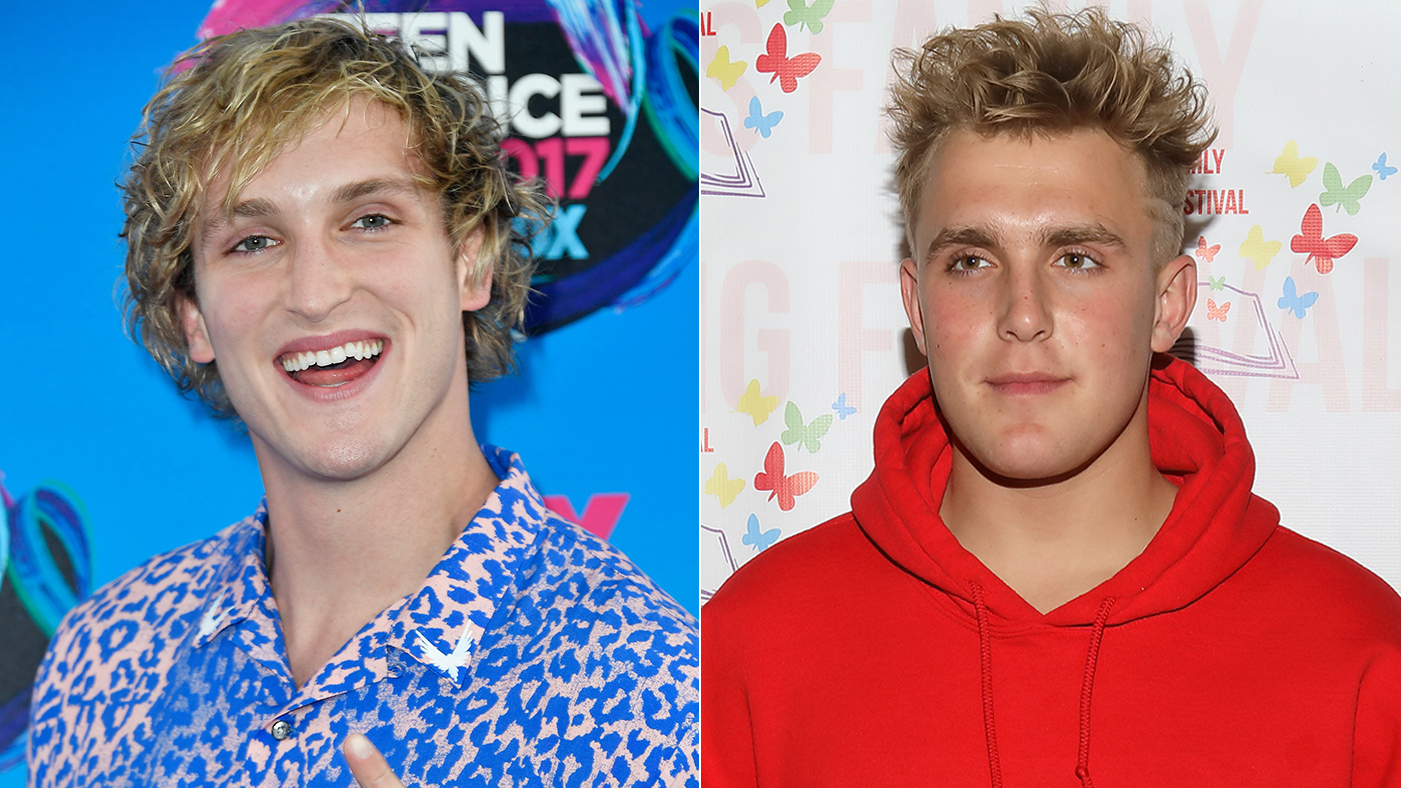
They’re loud, polarizing, and have done things that should have ended their careers multiple times. So why are they richer and more relevant than ever?
The first time I heard of the Paul Brothers was on an app called Vine — and to be honest, Vine was the first major platform where content creators were posting short form videos and really growing a large audience out of it. The Paul Brothers were known for pushing the boundary on what was accepted, but also for being two young guys who weren’t afraid to put themselves out there even if it meant being polarizing.
Logan Paul, the older of the two, had this aura of arrogance and confidence that was hard to ignore — but it felt like you always wanted to root against him. It honestly reminds me of some of my favorite wrestlers of all time playing heel. Ric Flair. Vince McMahon. Hollywood Hulk Hogan (although I was a huge fan of Hogan). The guys you loved to hate so much that you kept watching just hoping to finally see them fall. And if you think that comparison is a stretch — Logan Paul is literally a WWE wrestler now, which I would have never predicted.
Jake, the younger brother, was the same way — just not likeable, but you had to watch because of how much you didn’t like him. And if you’ve ever wondered whether posting constantly actually builds an audience, these two are one of the most extreme real-world case studies you’ll find.
“I want to find the intersection between digital media and traditional media and be pioneering the endeavor to merge the two worlds.”— Logan Paul
People will pay attention to you if they don’t like you
This is something I’ve found to be true about both brothers — and I’ll get more into it as we go. If you can consistently pull people in with the thought of “finally, he’s gonna get what he deserves,” that’s an audience. That tension keeps people coming back. It’s the same psychology that keeps you watching a villain in a movie even when you can’t stand them.
The clearest example of this for me is Logan Paul’s infamous Japan video. I don’t want to get too deep into the details — but it was deeply controversial. People felt that he disrespected an entire nation, and the video made headlines everywhere. What followed was an apology video that most people didn’t feel was genuine — like he didn’t fully grasp what he’d done wrong.
Do I think that was his intent going in? No. But I do think he knew people would be offended, and he knew it would get traction. And it takes something — a real psychological tolerance — to know people are going to hate you and still push forward because it means more visibility, more clicks, more money.
Most brands panic when their name hits the wrong headlines. The instinct is to neutralize it fast and move on. But controversy creates search volume, and search volume creates traffic. People click because they want justice. They share because they’re outraged. They come back because they want to see what happens next. The Pauls understood that before most brands had even thought about it. It’s the same reason the most memorable marketing rarely plays it safe.
Jake Paul fought Mike Tyson. Let that actually sink in.
Jake Paul built his career through online videos, then Disney Channel, then boxing matches against other YouTubers, then actual former UFC champions, then Mike Tyson, then Anthony Joshua — where he reportedly got his jaw broken and still came back for the next one.

I would have never thought any of that was possible. But here’s why it worked as a marketing engine — people didn’t tune in because they wanted Jake to win. They tuned in because they wanted to see him finally get what was coming to him. And every time he survived or won, it made the next fight more unmissable than the last. He’s not just selling a boxing match. He’s selling a villain arc that never fully resolves.
Forbes listed Jake as one of the highest-paid athletes of 2022, estimating around $38 million from boxing and business ventures alone. A YouTuber. On Forbes’ athlete list. That doesn’t happen by accident — that’s what happens when you understand how attention converts into money.
They saw where attention was going before everyone else did
The pattern across their careers is hard to ignore once you see it. Every move they made followed where attention was migrating. They didn’t get sentimental about platforms that were dying — they picked up their audience and moved. From Vine to YouTube to podcasting to WWE to consumer brands, they were always ahead of the curve. And it’s a playbook that goes beyond just influencers — even presidents have used the same instinct to stay relevant when the landscape shifts.

The fake beef was really a distribution strategy
The rivalry between Jake and Logan wasn’t just drama for the sake of drama — it was an engine. Every diss track, every callout video, every public argument pulled both of their audiences into the same conversation at the same time. Two massive fanbases colliding over and over, at zero ad spend. That’s double the reach, double the impressions, and double the emotional investment every single time it happened.
Take “It’s Everyday Bro” — objectively one of the worst songs ever made, and one of the most disliked videos on YouTube. Jake didn’t pull it down. He leaned in. Because viral is viral, and outrage is just attention with an edge to it. Most brands would have buried the campaign and issued a statement. Jake turned it into a tour.
Prime Hydration wasn’t a product launch — it was an audience activation
Logan didn’t just randomly decide one day to sell a sports drink. For years before Prime existed, he was already talking about health, training, and performance — through his podcast, his boxing content, his day-to-day brand. By the time the product actually launched, the audience already believed in that version of him. It felt inevitable, not like a cash grab.

Prime Hydration reportedly made $250 million in its first year. That doesn’t happen with a cold launch. That happens when years of positioning make the product feel like the only logical next step.
Traditional marketing separates awareness, consideration, and purchase into different stages and different campaigns. The Pauls compressed all three into a single piece of content. Watch the video, feel the lifestyle, click the link. The content was the ad and the ad was the content — and the line between them was invisible. That’s incredibly hard to manufacture. They did it naturally.
The comeback cycle is its own marketing tool
Every controversy they faced followed the same arc — provocation, outrage, silence, reinvention, and then a bigger platform than before. Nike has done versions of this. Apple has done it. The Pauls did it with their own lives as the product. The public stayed emotionally invested through every high and every low, which is exactly how brands that last maintain relevance across decades.

So what does this actually mean for marketing?
Both brothers have become widely successful in their own lanes. Logan is a full-time WWE superstar with a podcast and a growing portfolio of ventures. Jake has made millions through boxing and built real businesses around it. And the correlation with marketing is actually pretty simple when you step back and look at it.

For people to pay attention, they need a reason to. Not a good reason — just a reason. In every movie, the villain is the one you root against, and every time they win it gives you even more reason to keep watching until it finally goes the other way. The Paul Brothers built entire careers out of being that villain. And somewhere along the way, the audience got so invested that it stopped mattering whether they won or lost — people just couldn’t stop watching.
That’s not luck. That’s one of the most effective long-game marketing strategies I’ve seen — and most brands are still too afraid of being disliked to even attempt it.
Leave a Reply